Auction 1 - Rare Hebrew Books, Manuscripts & Rabbinic Letters
Lot 49:
Description
Far more than a prayer book, Safah Berurah was one of the landmark achievements in the history of the Hebrew liturgy. First issued at Rödelheim in 1799, it transformed the Ashkenazic siddur from a text long transmitted through divergent local traditions into a carefully edited, critically established edition based upon manuscripts, early printed siddurim, Masoretic principles, and the writings of earlier grammarians and liturgical authorities. Scholars have observed that the names Heidenheim and Rödelheim became virtually synonymous with typographical accuracy and textual precision, even describing Heidenheim and his successor Seligmann Baer as the “last of the Masoretes” for applying the exacting standards of Biblical textual scholarship to the Jewish prayer book.
Wolf Heidenheim (1757–1832) devoted more than fifty years to the study of Hebrew grammar, Masorah, Bible, and liturgy. His work extended far beyond correcting printers’ errors; he sought to restore the Hebrew of the siddur according to consistent philological principles while simultaneously illuminating its prayers and piyyutim through scholarly introductions, commentaries, and translations. Although modern scholarship has shown that earlier authorities, notably Shabbethai Sofer, had already pursued similar textual ideals, it was Heidenheim’s editions that achieved lasting authority. As Reif notes, after the work of Heidenheim and Baer, a more uniform Hebrew text became standard throughout the Ashkenazic prayer book, and their Rödelheim editions served as the foundation for much of subsequent Western European liturgical printing.
The influence of Safah Berurah reached well beyond the circles of academic scholarship. The Chatam Sofer remarked that, “were it not for Heidenheim’s efforts, the piyyutim themselves would already have fallen into oblivion and no longer been recited in these generations.” Likewise, a documented testimony of R. Yisrael Jaffe, printer of the first edition of the Alter Rebbe’s siddur, records that the Alter Rebbe instructed him to proofread the text against Heidenheim’s Rödelheim siddur because it was “exceptionally accurate”. Whether viewed as a masterpiece of Hebrew typography, a milestone in Jewish philology, or the edition that decisively shaped the form of the modern Ashkenazic siddur, Safah Berurah occupies a singular place in the history of Hebrew printing.
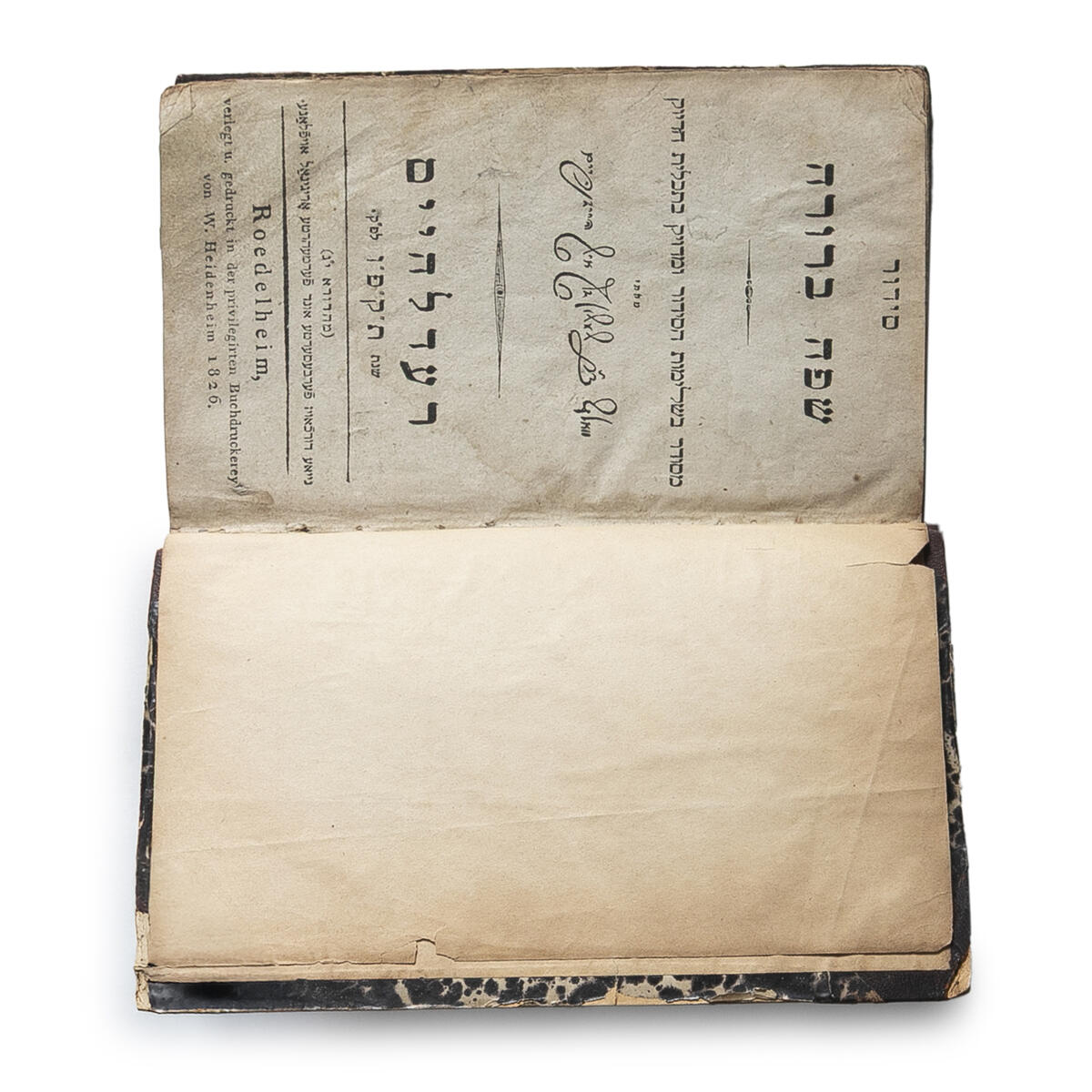
The present copy is the thirteenth edition, printed at Heidenheim’s own privileged Rödelheim press in 1826, during the editor’s lifetime. Its edition number alone speaks to its remarkable reception: within less than three decades of its first appearance, Heidenheim’s siddur had become the authoritative standard for countless communities, its influence extending far beyond Germany and continuing to shape the Hebrew prayer book into the modern era.
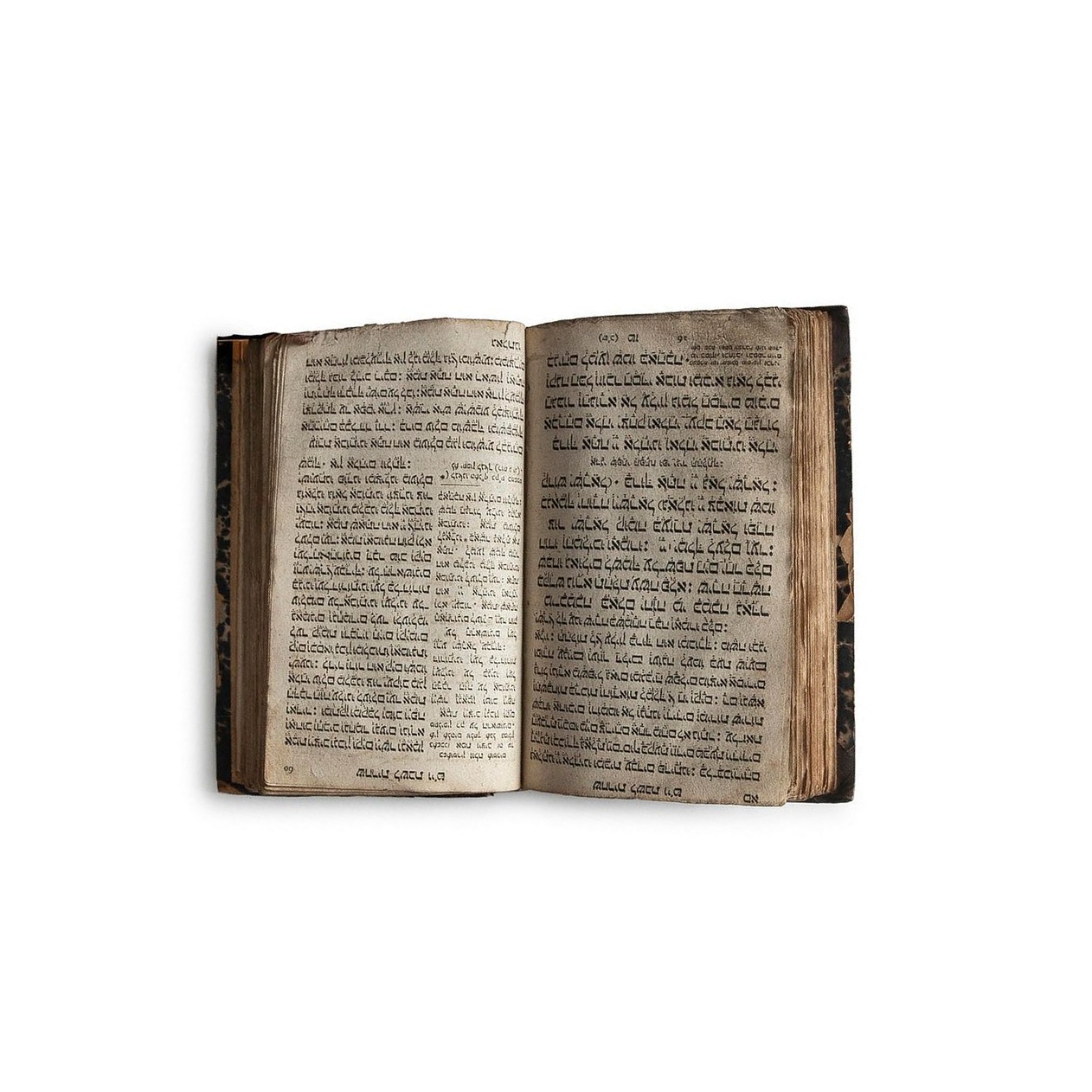
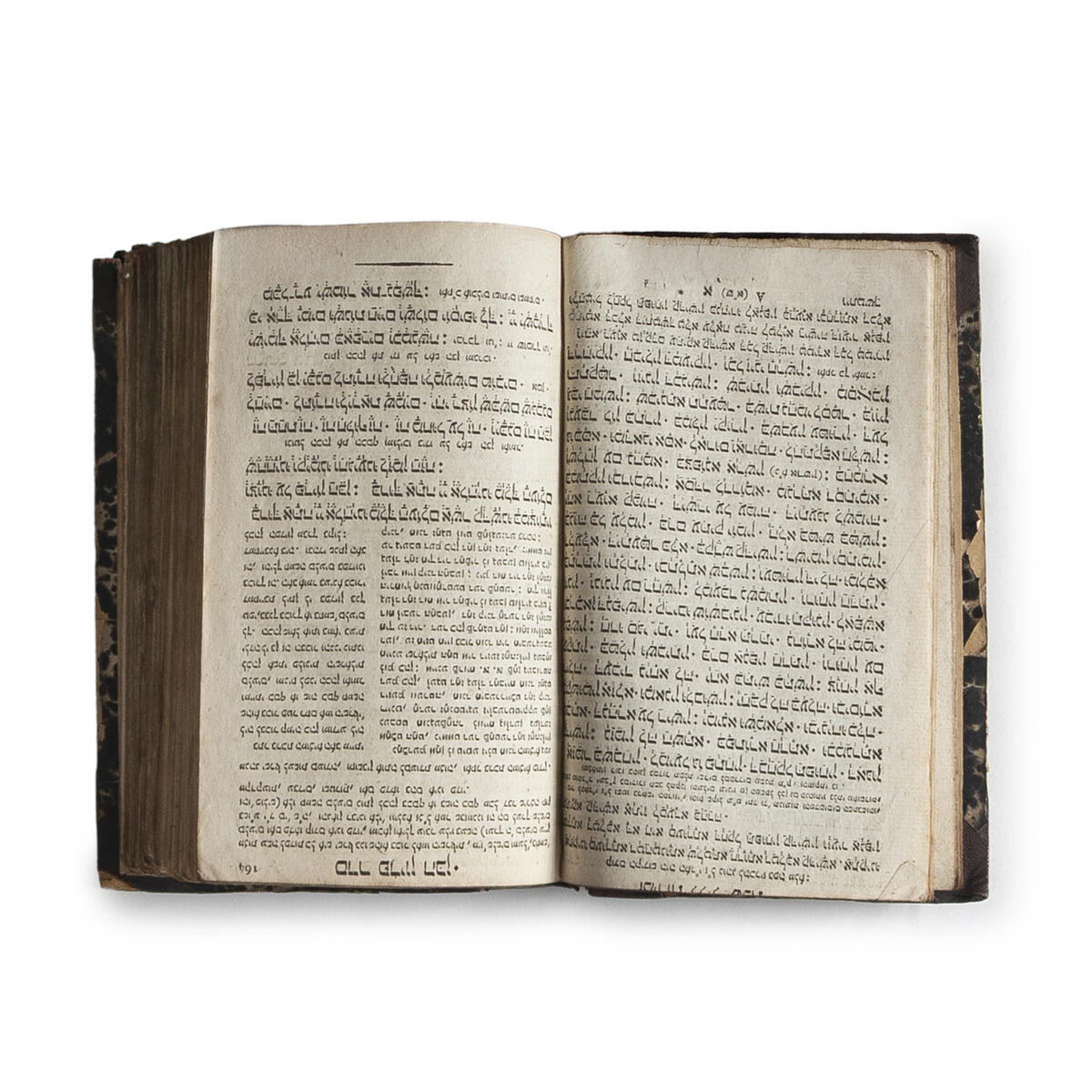
Very good condition. Contemporary half-leather binding over marbled paper-covered boards. Minor tears at the lower margins of pp. 22–23; small repair to the lower border of p. 32, not affecting text. Binding rubbed with wear concentrated at the spine and extremities; internally a clean, well-preserved copy.
Reference: Reif, Shabbethai Sofer 60; Id., Judaism 263-4; Kahle, The Cairo Geniza 63; Elbogen, Der jüdische Gottesdienst; Gottlober, Zikhronot (1881) 2:32; Chasam Sofer, Responsa CM, no. 79.
Opening price: $600
Share this lot: