Auction 1 - Rare Hebrew Books, Manuscripts & Rabbinic Letters
Lot 11:
Description
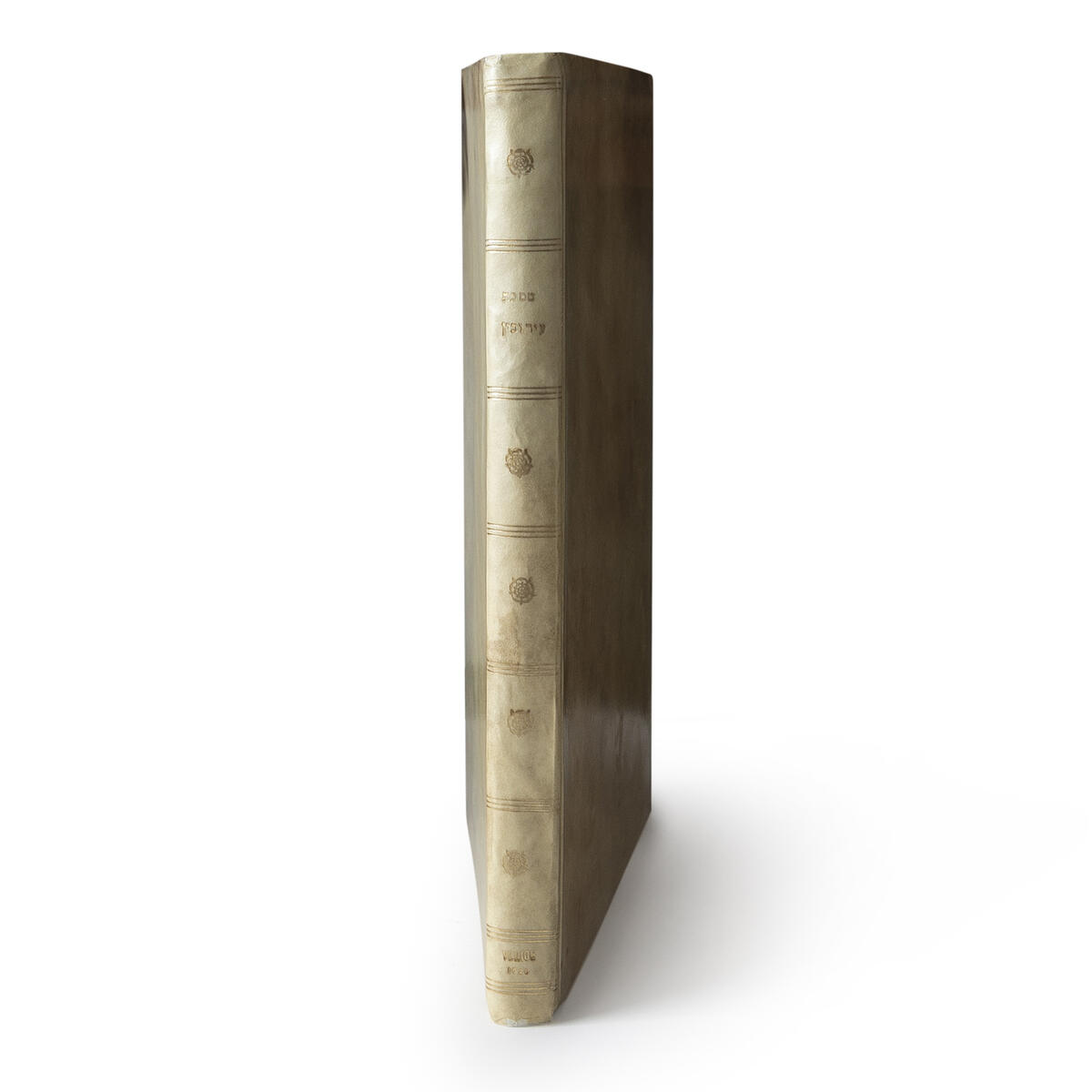
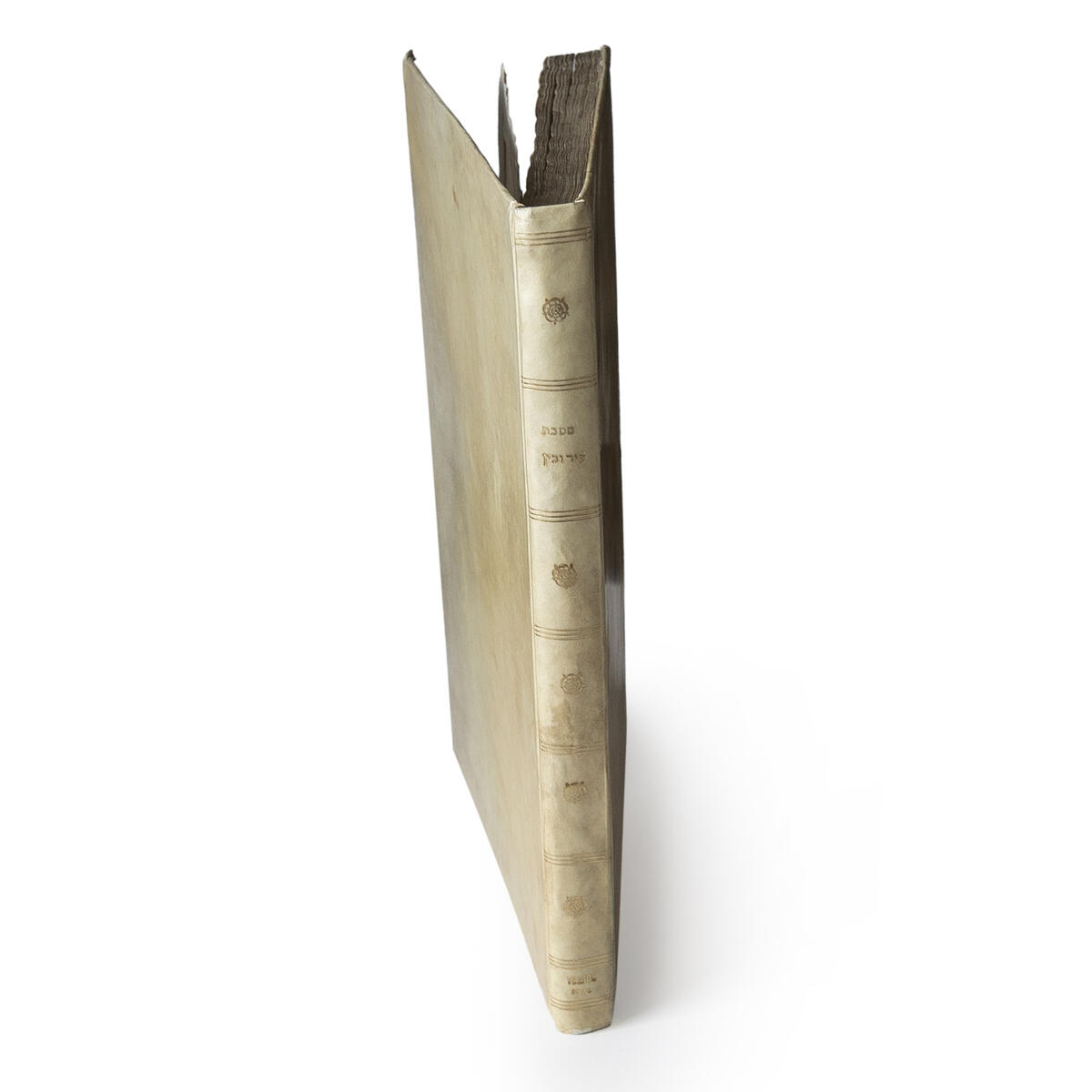
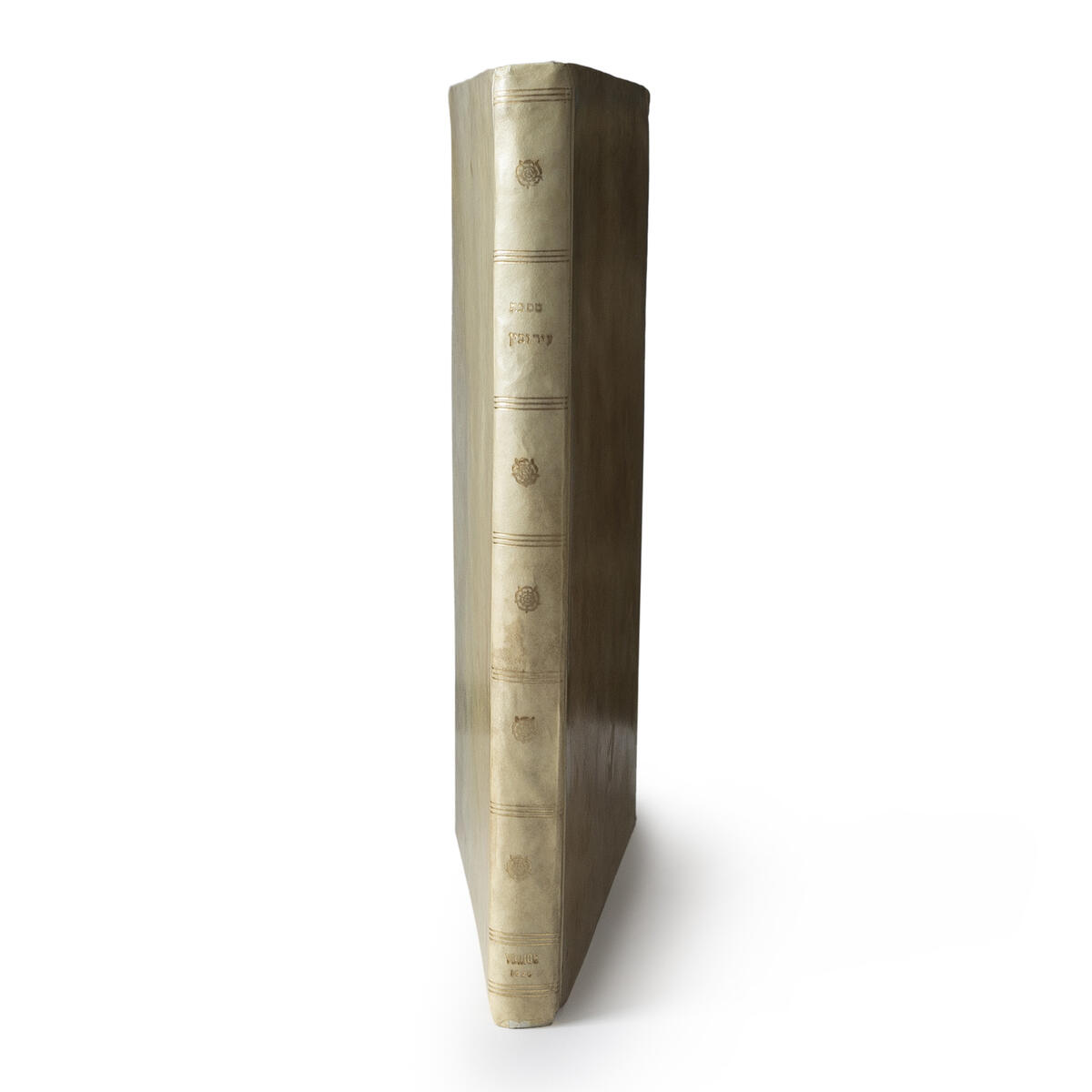
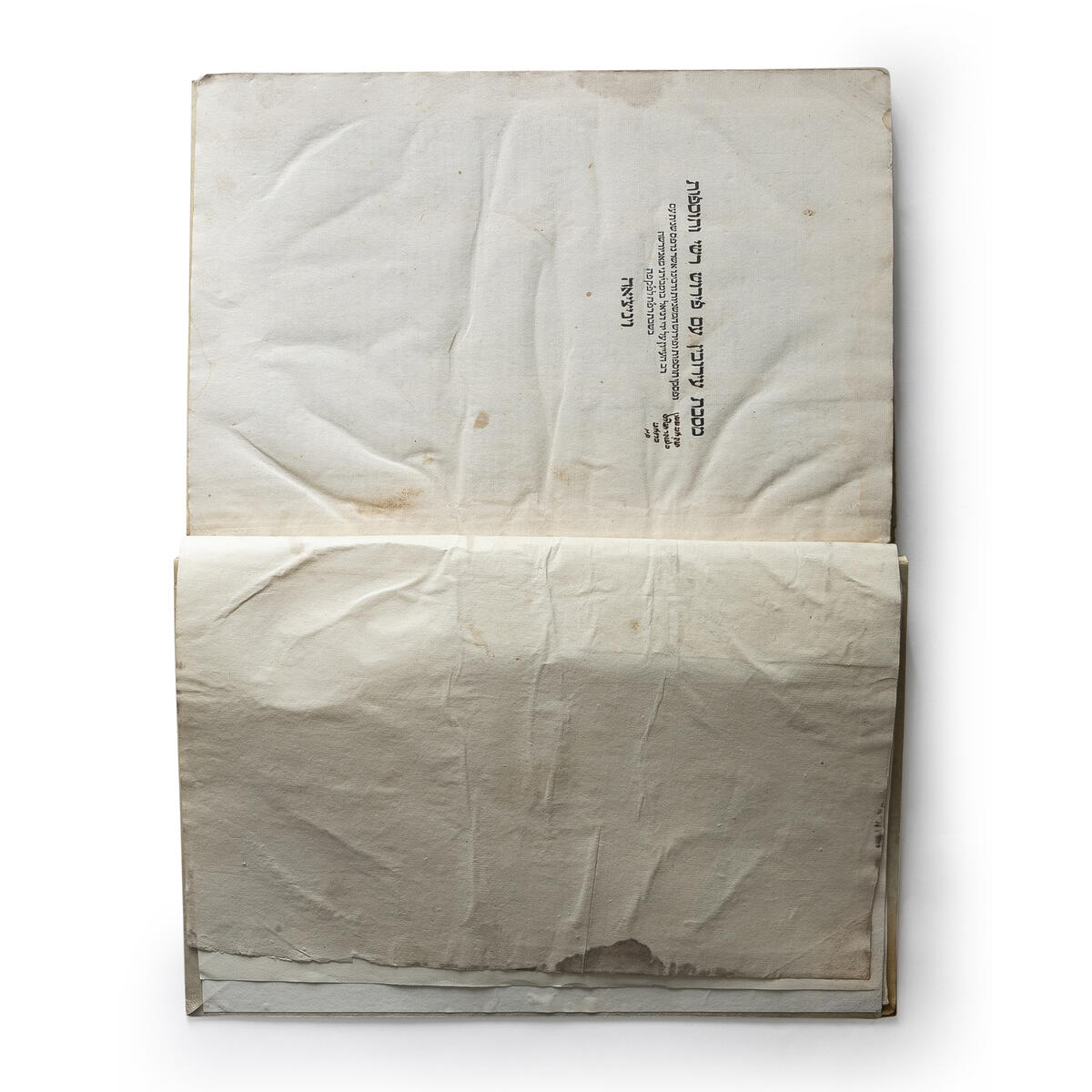
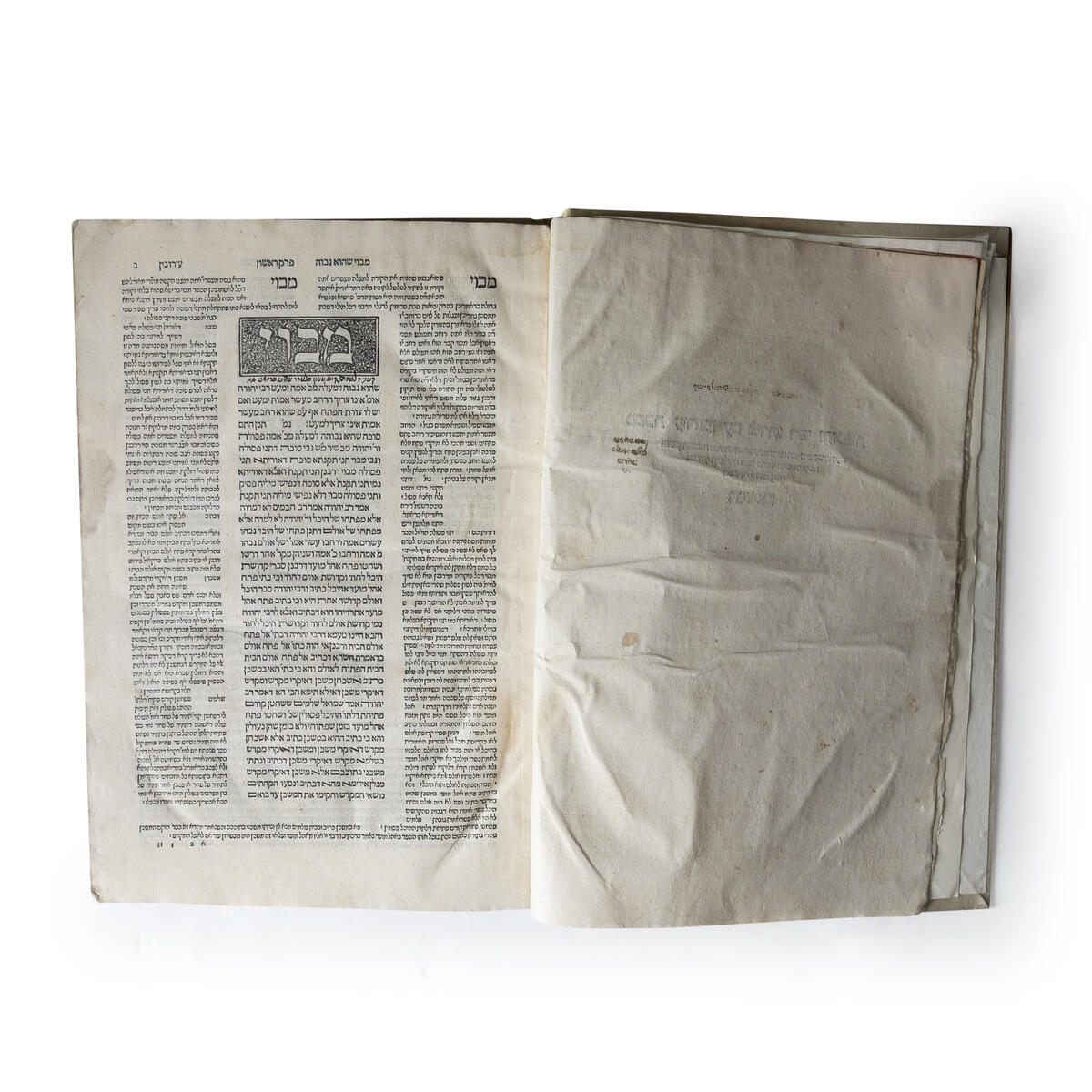
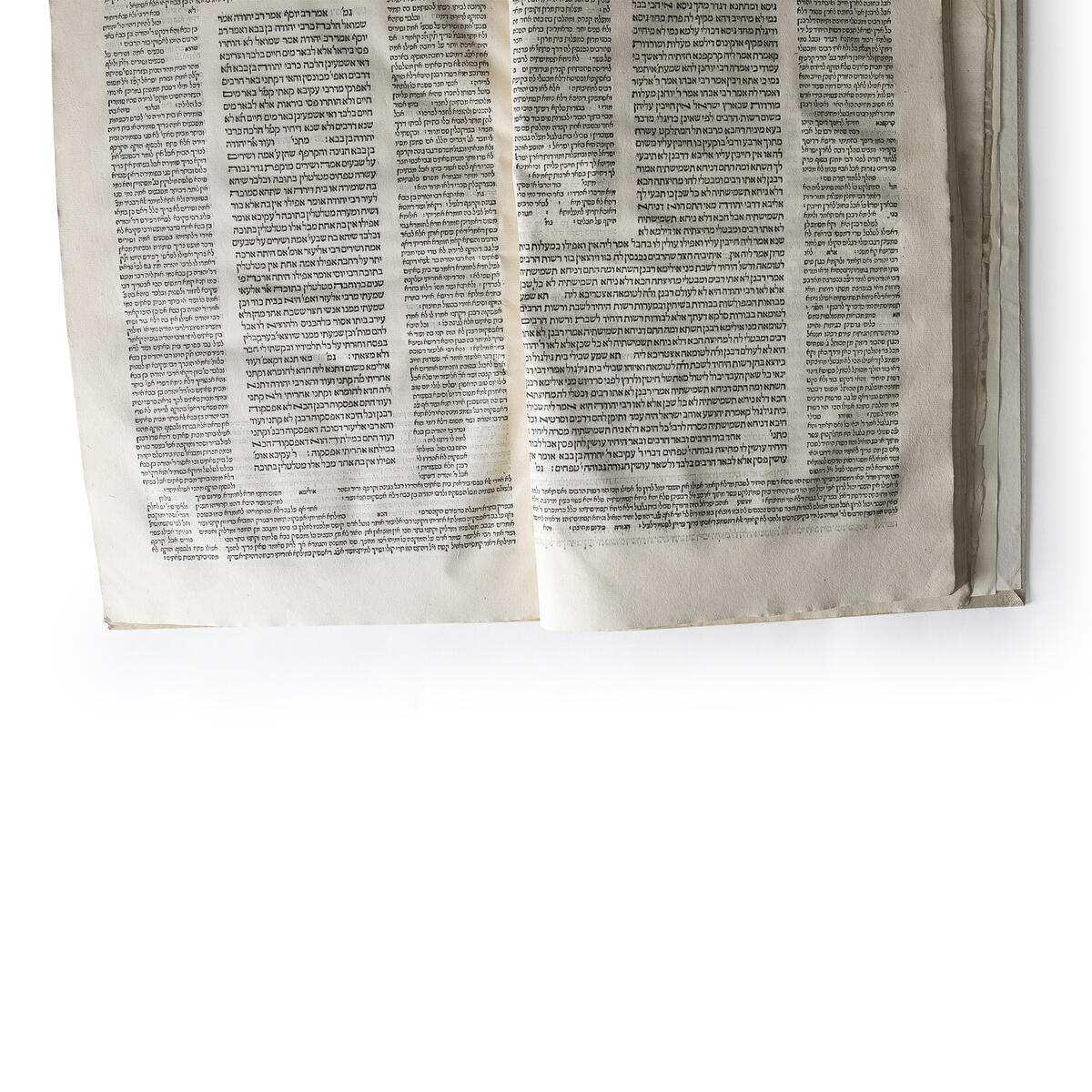
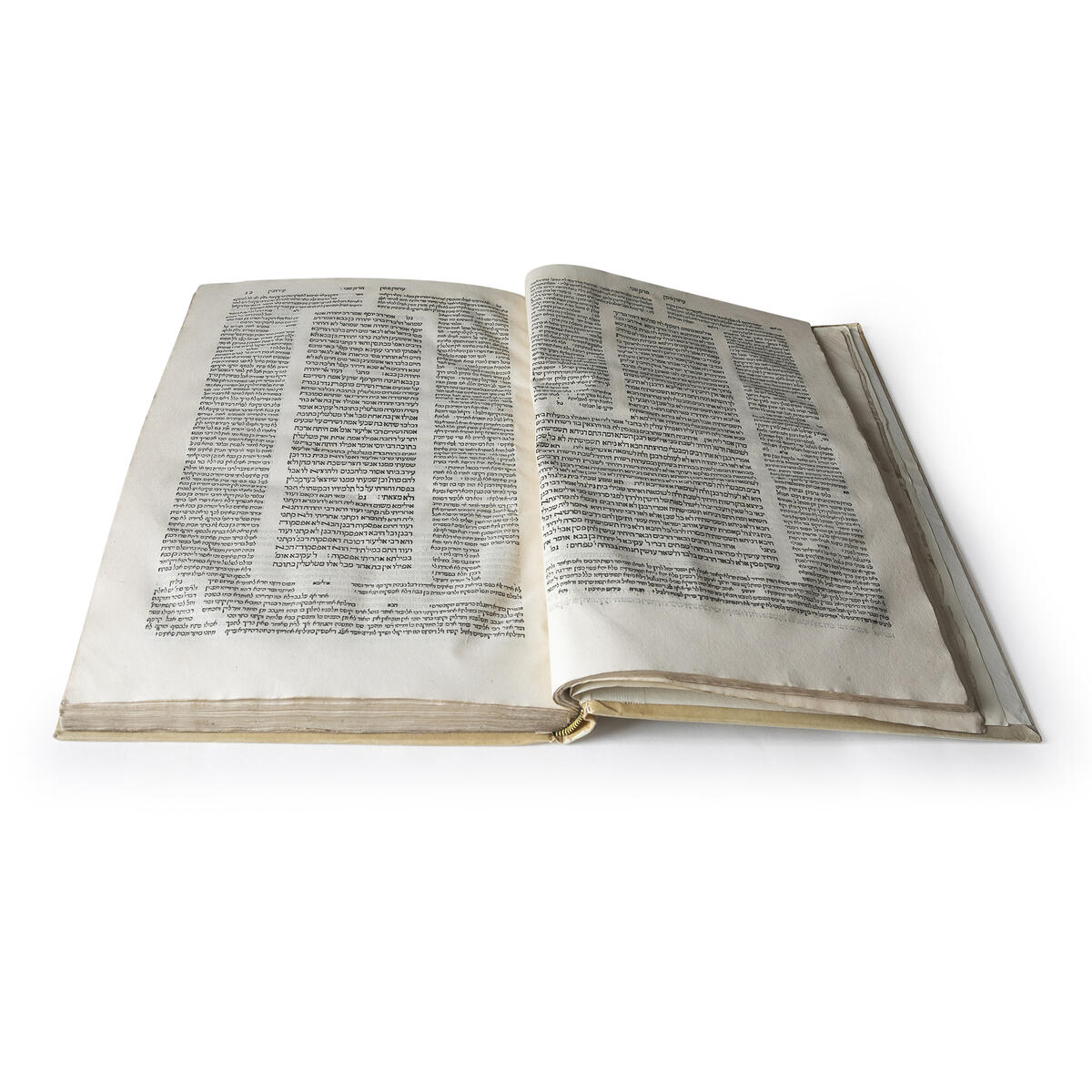
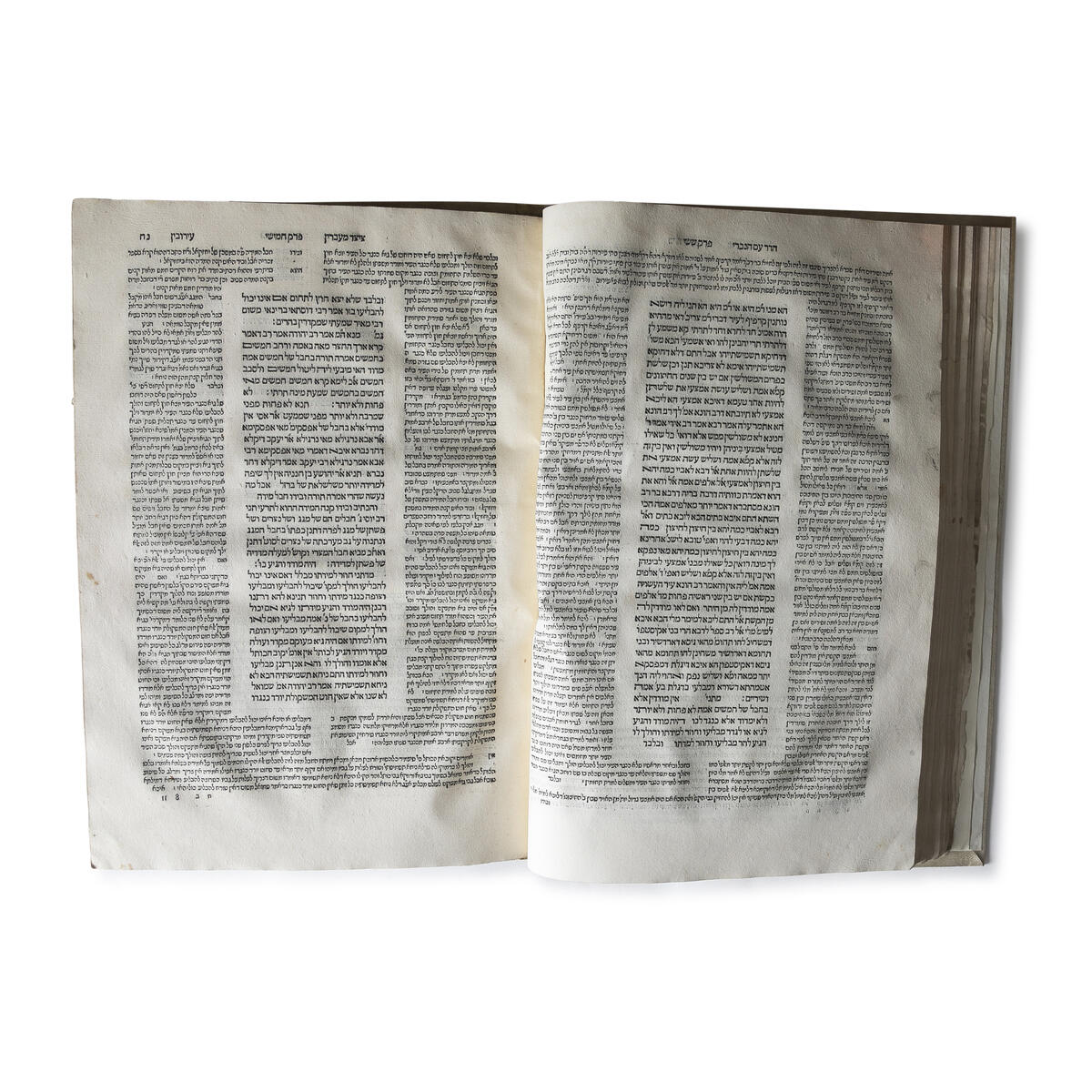
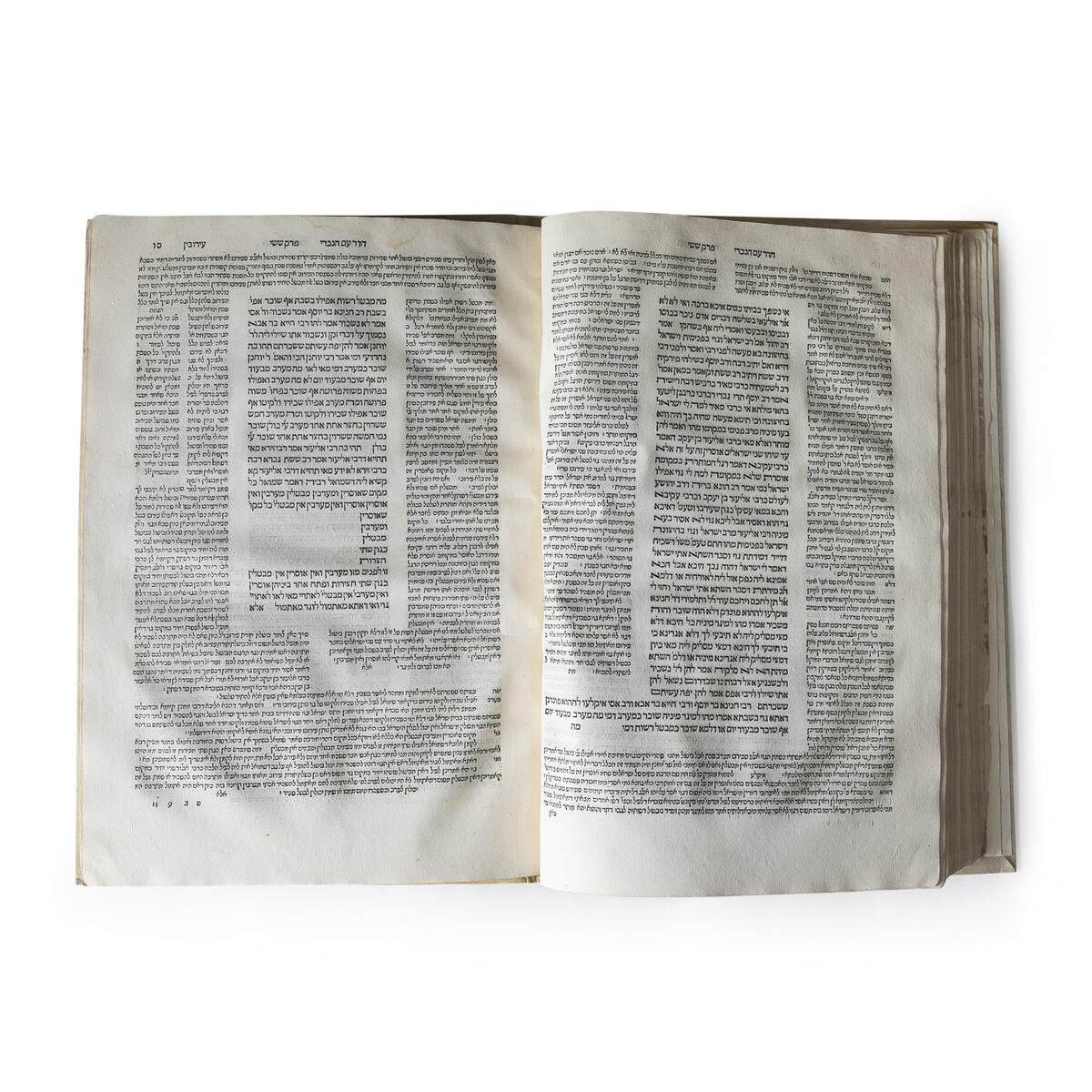
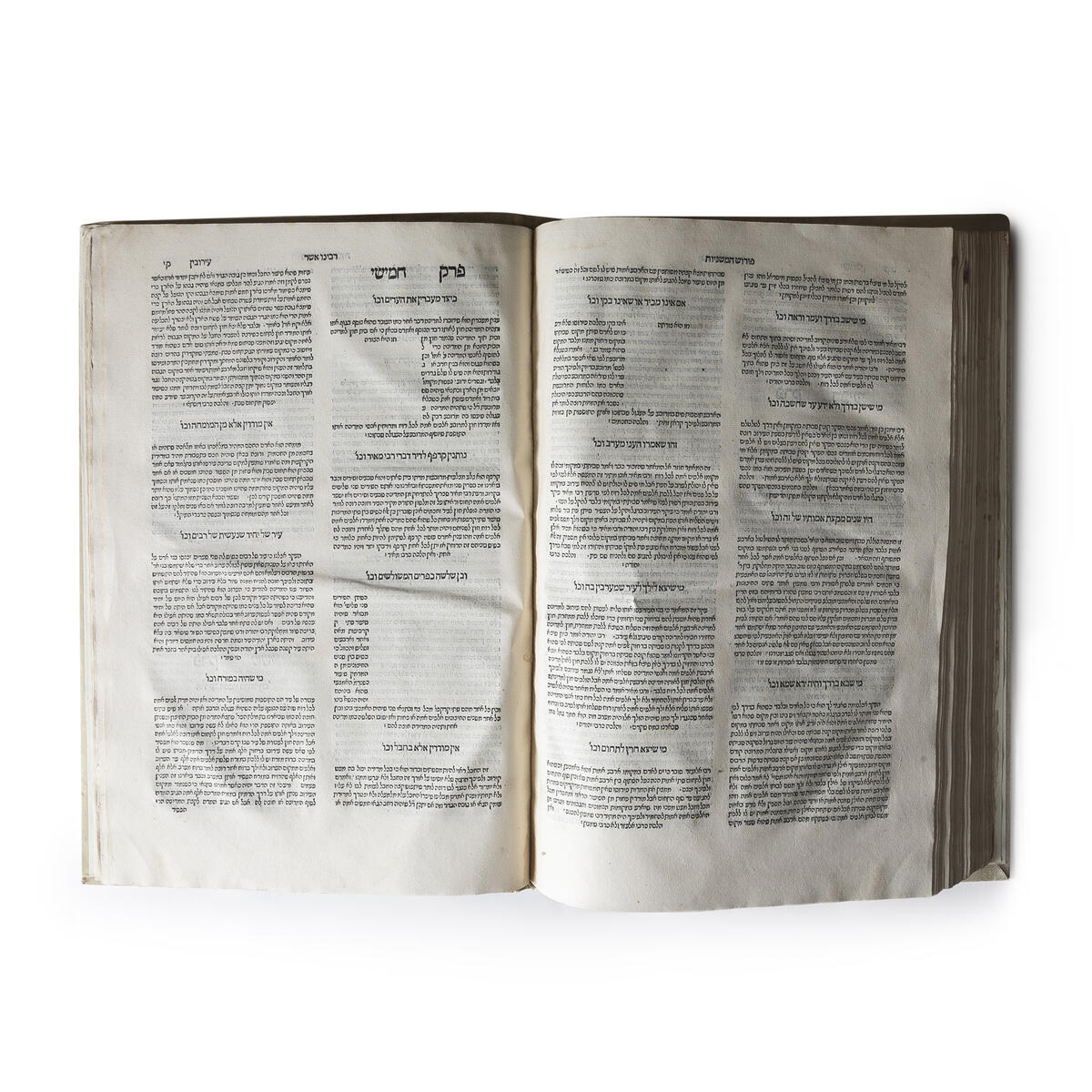
Talmud Bavli, Tractate Eruvin. Venice: Daniel Bomberg, 1528.
A large and imposing copy of Masechet Eruvin from Daniel Bomberg’s edition of the Babylonian Talmud, printed in Venice in 1528. Bomberg’s first complete Talmud, issued in Venice in 1520–1523, established the page architecture that would become standard in virtually all subsequent editions: the text of the Gemara surrounded by Rashi and Tosafot, with a remarkably durable system of pagination and arrangement. The present volume belongs to Bomberg’s second edition of the Talmud, undertaken only a few years later.
This second edition was not merely a resetting of the first. Improvements and corrections were made to the texts of both the Gemara and Rashi, while the scholarly apparatus was also augmented with biblical references, cross-references to parallel Talmudic passages, references within Tosafot, and the Kitzur Piskei ha-Rosh. It thus represents a further stage in the editorial development of the printed Talmud soon after Bomberg’s monumental first edition.
Eruvin, with its exceptionally complex discussions of spatial boundaries, courtyards, alleyways and Sabbath domains, posed particular challenges to the early printers. Numerous passages require geometrical or architectural diagrams. In this edition, spaces were on occasion left within the printed page for such figures rather than supplied with printed diagrams, an evocative feature of the practical difficulties involved in transferring this unusually visual tractate to print.
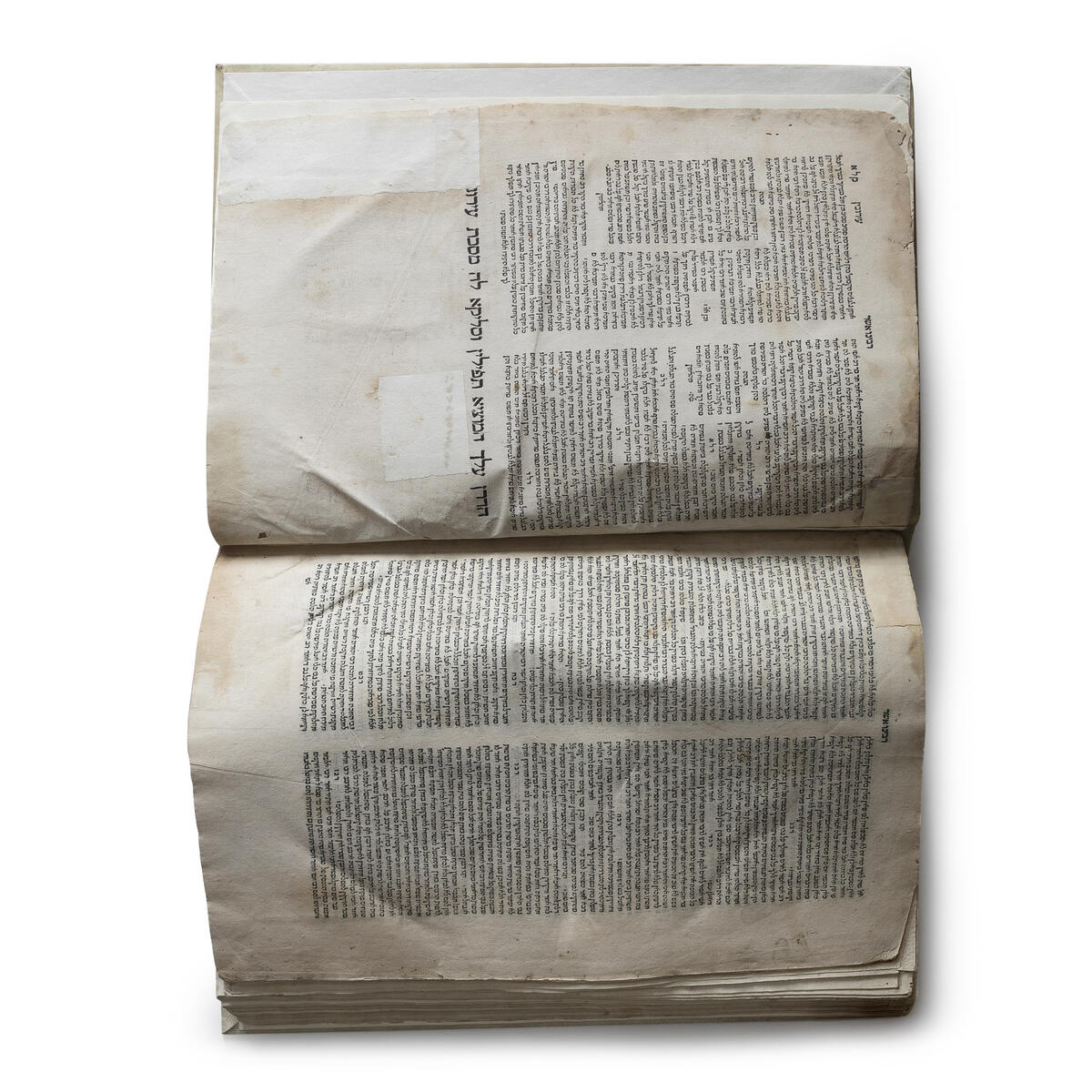
Provenance: Two ownership inscriptions of Sasson ben Mordecai Barzani, apparently identifiable with the Sasson ben Mordecai Barzani of Mosul known from other Hebrew manuscripts and books of the nineteenth century. A manuscript of the She’iltot later in the celebrated David Solomon Sassoon collection likewise records the ownership of “Sasson ben Mordecai Barzani of Mosul,” active in the mid-nineteenth century. Other books bearing the name Sasson Barzani are also known.
On fol. 2a the owner records his acquisition in a particularly appealing formula:
Share this lot: