Auction 1 - Rare Hebrew Books, Manuscripts & Rabbinic Letters
Lot 19:
Description
Among the monumental codifiers of post-Talmudic halakhah, R. Mordechai Jaffe (c. 1530–1612) occupies a singular place. His Levushim were conceived as a lucid and systematic alternative to the vast Beit Yosef while expanding upon the concise Shulḥan Arukh. Integrating the rulings of earlier authorities with the customs and jurisprudence of Ashkenaz and Poland, the Levush rapidly assumed a central place in the study and practice of halakhah, becoming one of the principal authorities upon which subsequent generations of decisors relied.
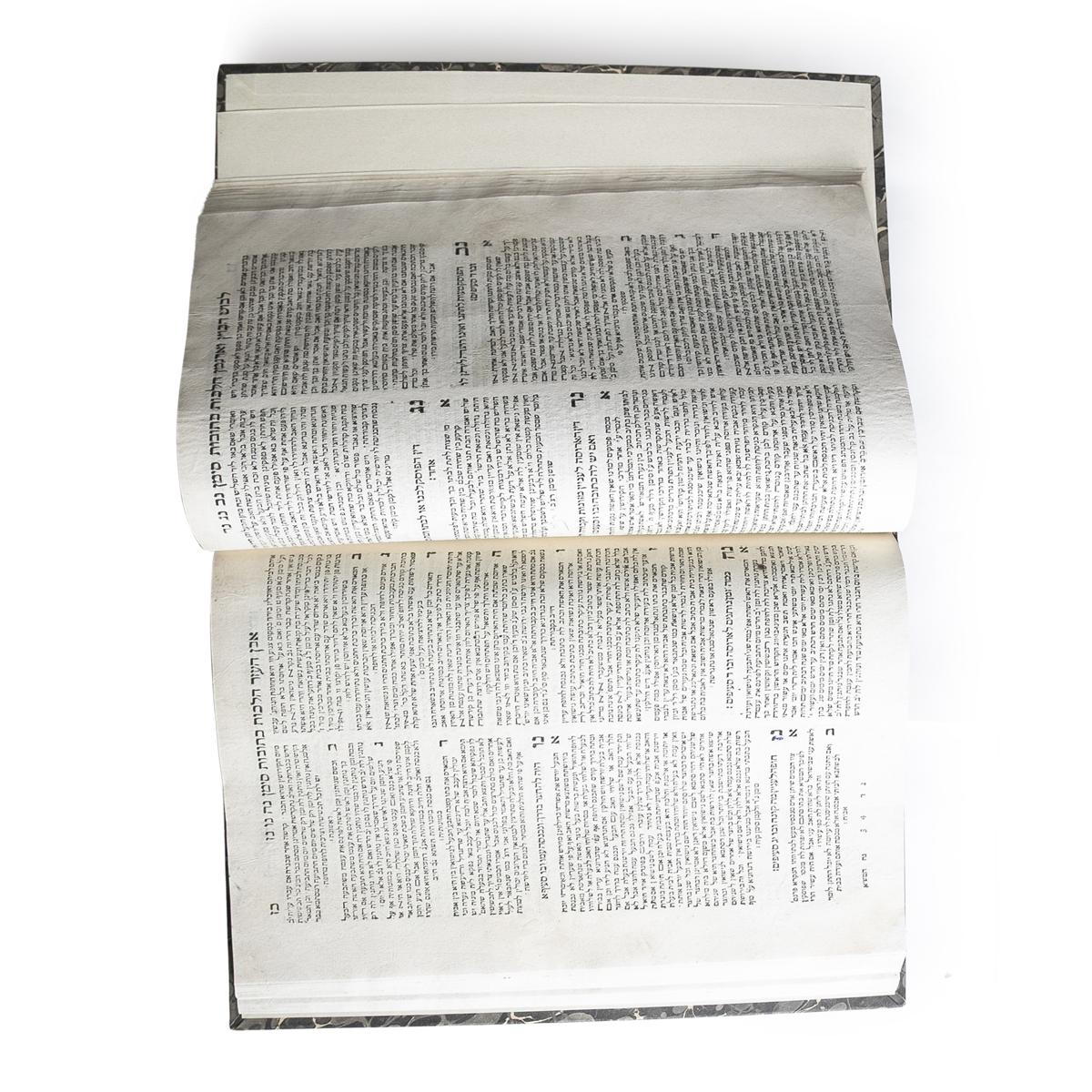
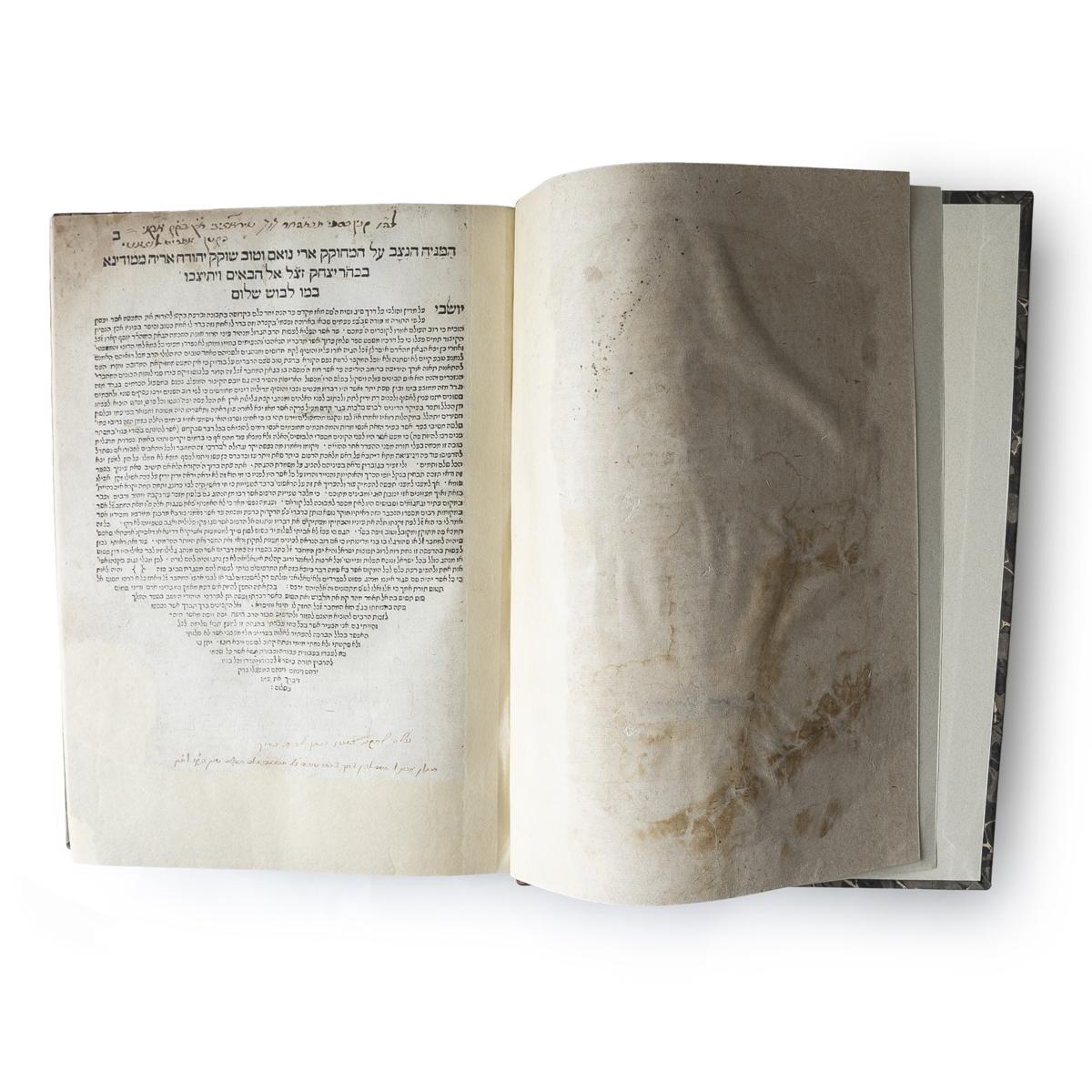
Printed only a few years after the author’s passing, this important Venice edition was prepared under the supervision of R. Yehudah Aryeh (Leon) Modena (1571–1648), the renowned Venetian rabbi, preacher, editor, polemicist, and one of the outstanding Jewish intellectuals of early modern Italy. In his editorial introduction to Levush Ha-Tekhelet, Modena notes, using curly brackets, those customs described by the Levush that reflected Ashkenazic usage rather than the practice of the Italian and Levantine communities, thereby adapting the edition for its contemporary Italian readership while preserving the integrity of the original text.
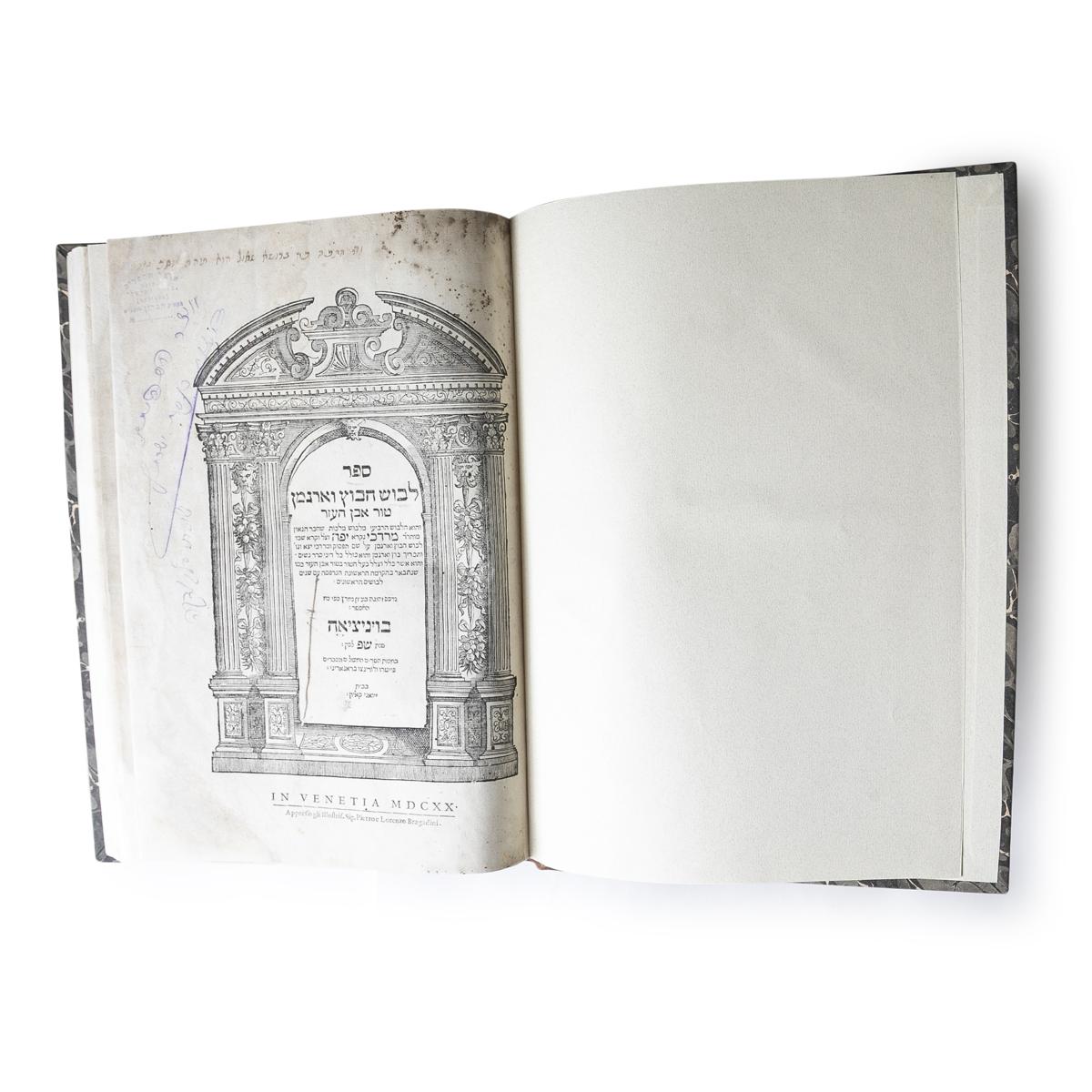
Appended to Levush Ha-Butz ve’ha-Argaman is the Levush’s responsum concerning the celebrated Venetian controversy of 1609 over the priestly status of a member of a family of former anusim who married a divorcée, a dispute that elicited rulings from leading rabbinic authorities throughout Italy, Poland, and the Ottoman Empire. The responsum had already been incorporated into the Prague edition of 1609 during the Levush’s lifetime. In the present edition, however, it appears beneath the prominent heading “שאלה ממעשה שהיה בויניציאה”. Whether intended merely as a descriptive rubric or as a subtle editorial emphasis, the heading is particularly noteworthy in an edition prepared under Modena’s supervision, as Modena himself participated in the controversy and ultimately reached the same practical conclusion as the Levush.
This copy preserves an attractive and well-documented provenance. An ownership inscription in Levush Ha-Tekhelet, dated 1746, records the volume in Nizza della Paglia (Nizza Monferrato) in the possession of Moshe de Benedetti (לבית ברוך), son of R. Tuvia. Contemporary Piedmontese archival records independently document le-Veit Barukh as the Hebrew equivalent of the Italian surname De Benedetti. A later acquisition inscription records the purchase of the volume from R. David Tirazzini, Moreh Tzedek of Acqui, by an Ephraim Luzzatto, whose precise identity has not yet been established with certainty. The volume of Levush Ha-Butz ve-ha-Argaman subsequently entered the library of Yeshivat Knesset Yisrael, Slabodka–Hebron, whose ownership stamp appears on the title page.
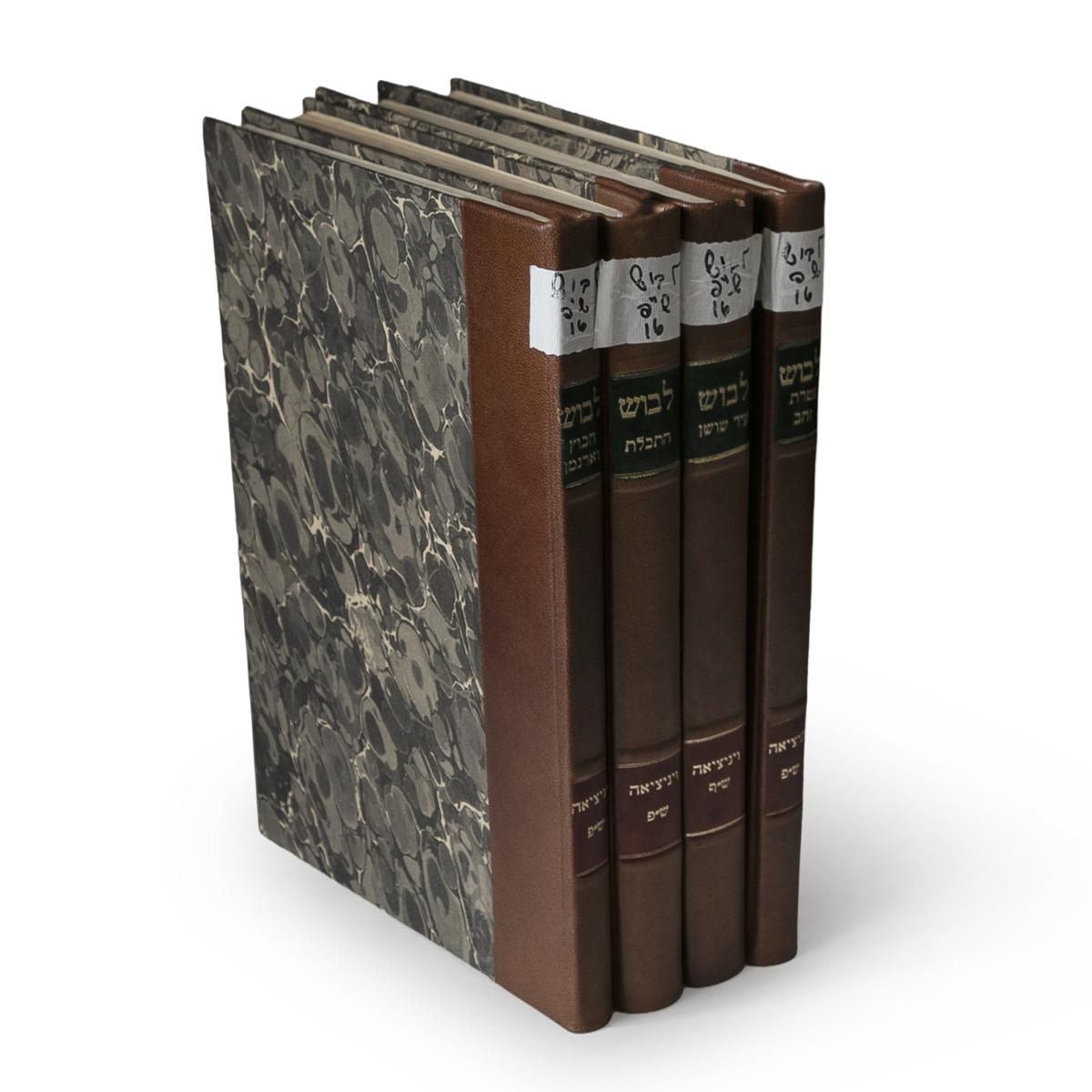
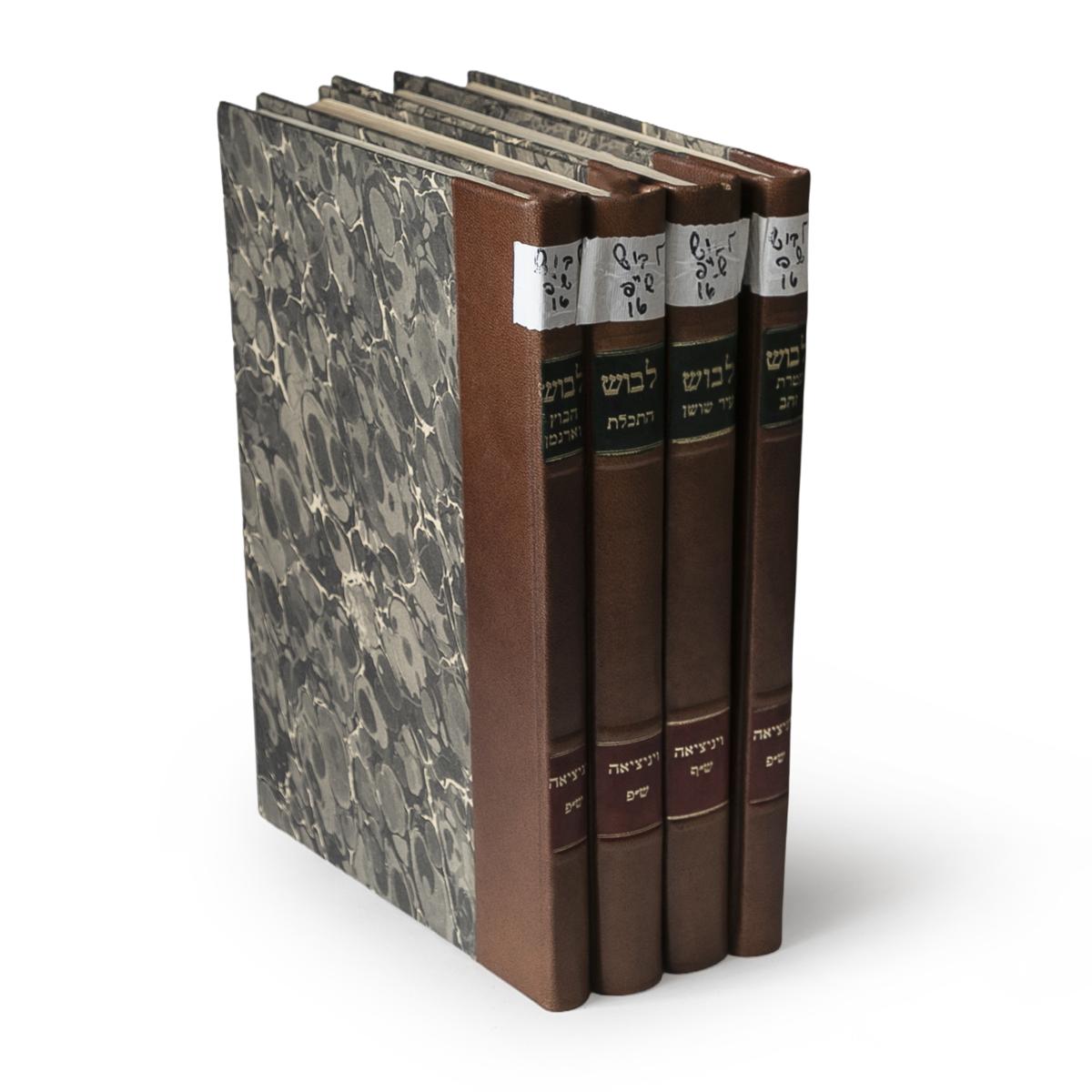
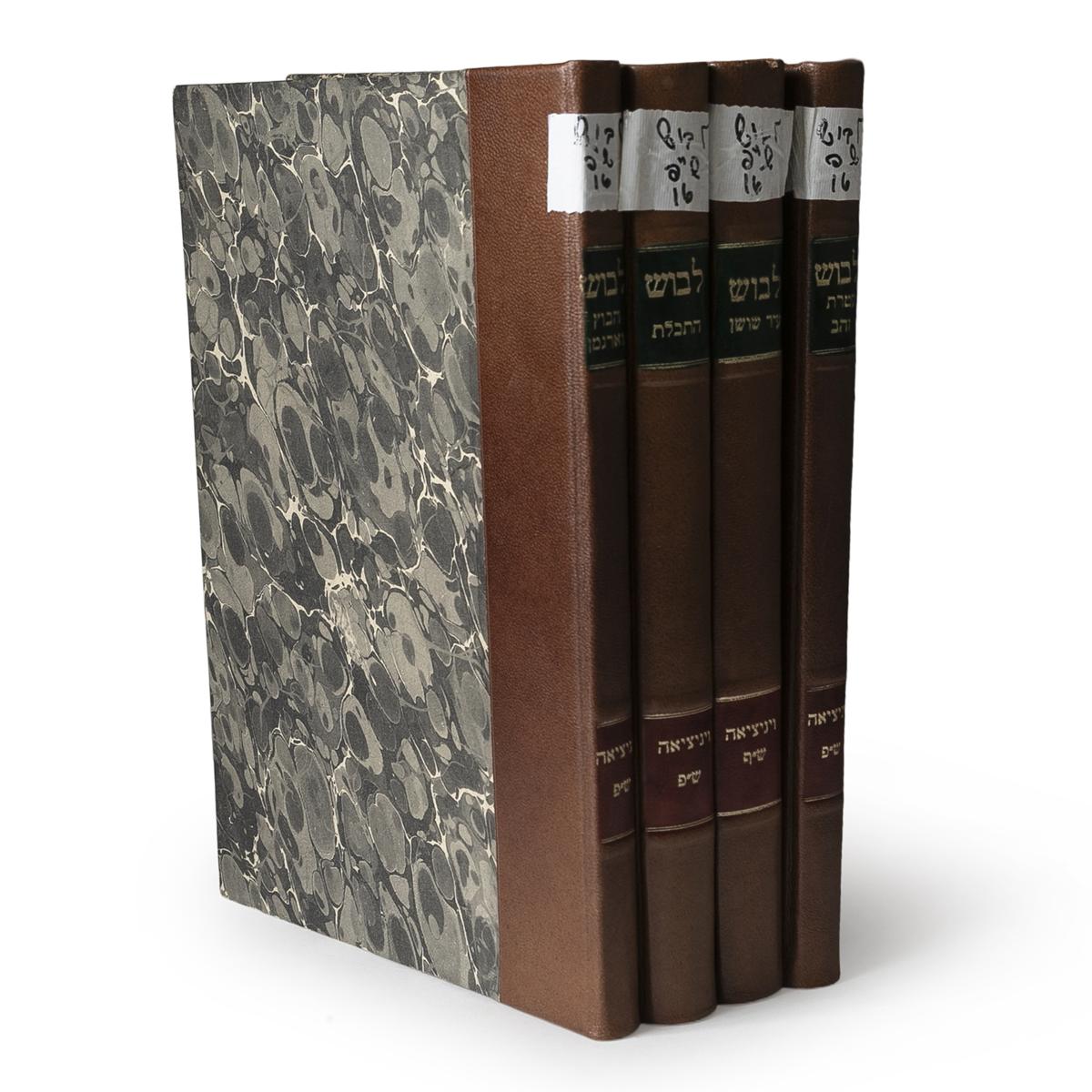
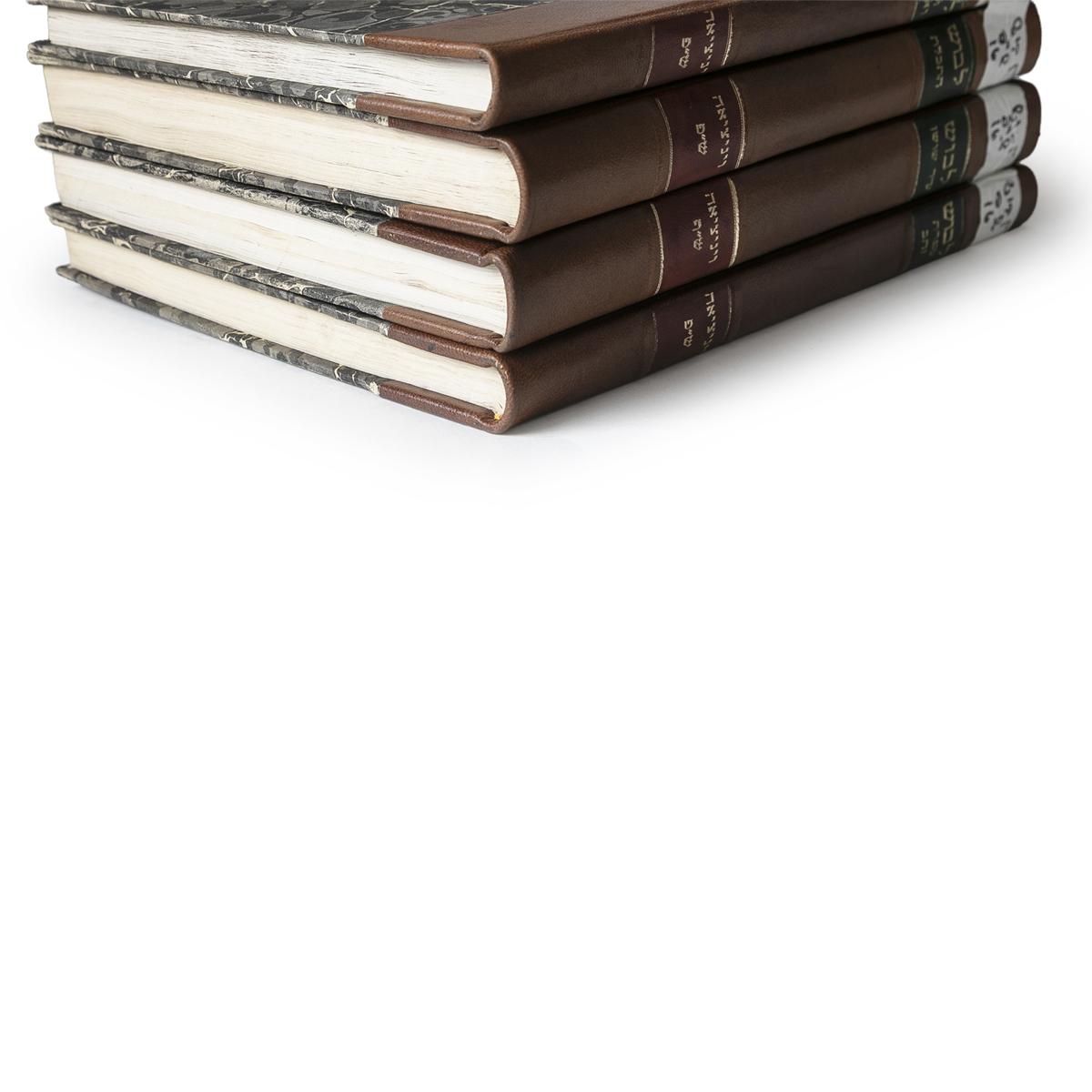
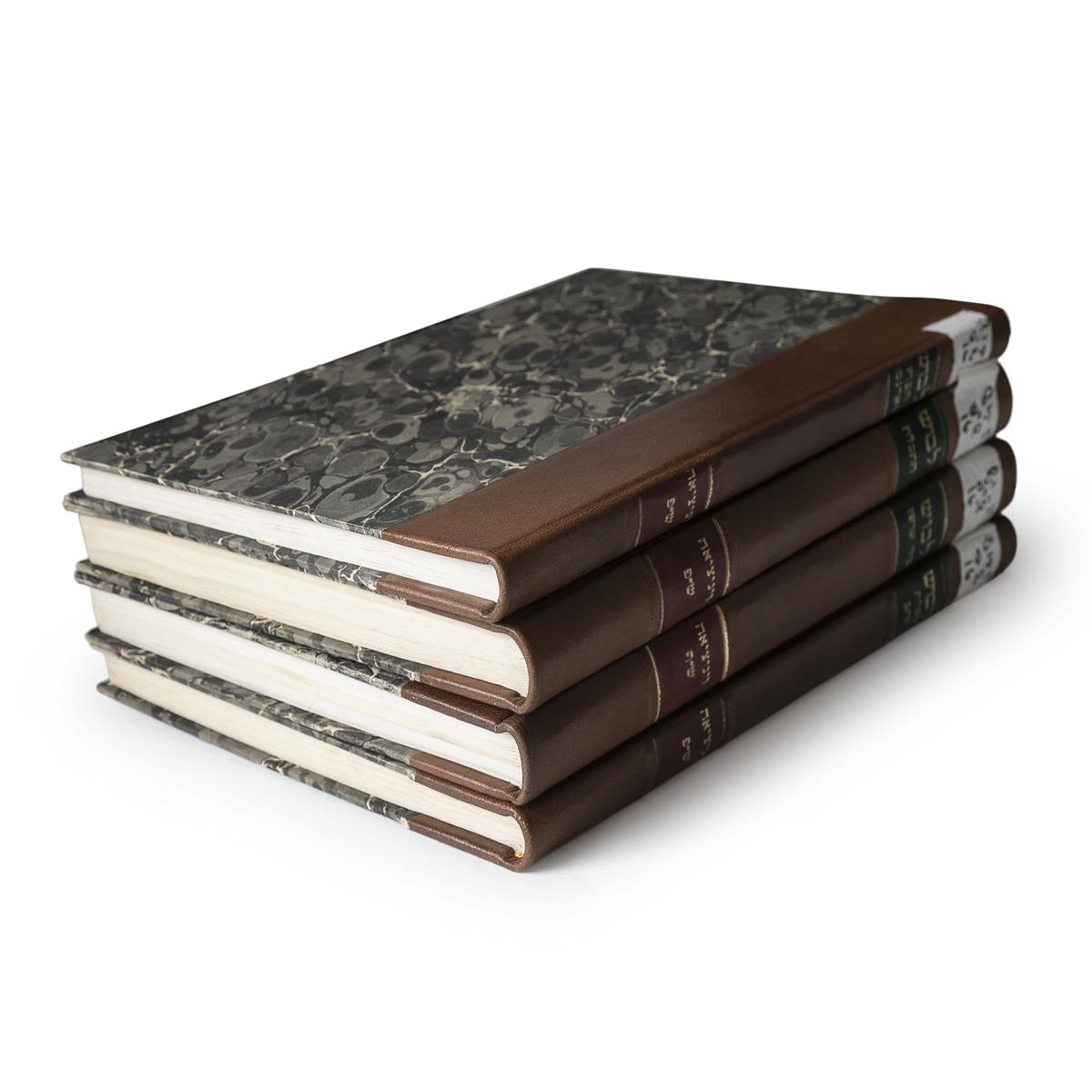
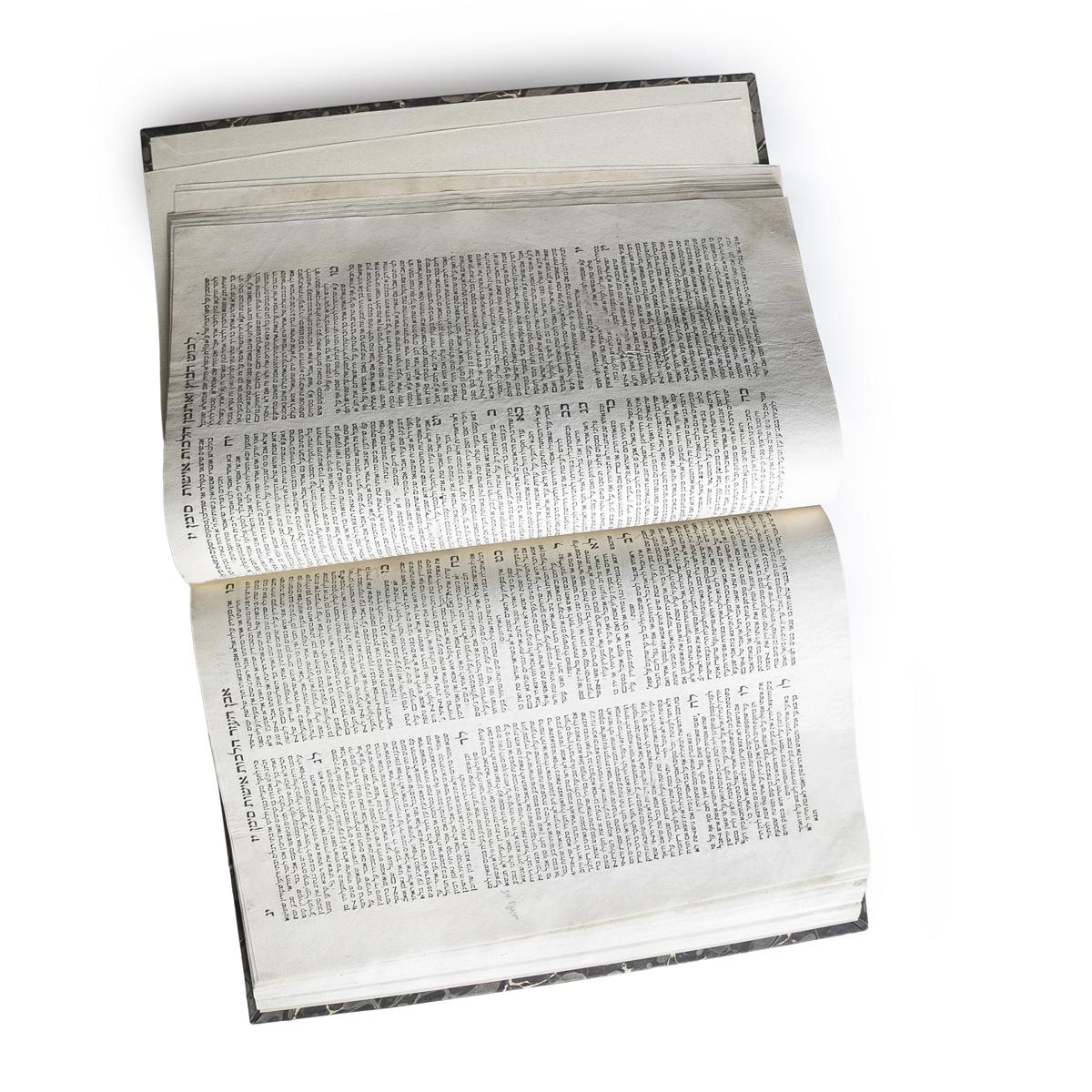
Four volumes, uniformly bound in modern quarter brown goatskin over marbled boards, gilt-lettered spine labels: Levush Ha-Tekhelet bound together with Levush Ha-Ḥur, Levush Ateret Zahav, Levush Ha-Butz ve-ha-Argaman, Levush Ir Shushan. Title pages professionally restored at the margins, with additional expert restoration to scattered leaves throughout the set. Minor worming, skillfully repaired; occasional light staining. A handsome and well-preserved set.
Reference: Modena, Ziknei Yehudah n. 23; Benayahu, Relation Between Greek and Italian Jewry (1980) 162-8.
Provenance: The collection of Abraham Lieberman, Flatbush, Brooklyn NY
Opening price: $1500
Share this lot: