Auction 1 - Rare Hebrew Books, Manuscripts & Rabbinic Letters
Lot 32:
Description
Modena, late 1630s.
Background to the manuscript:
A Christian censor issues a demand. The leaders of the Jewish community formally acknowledge it. Aging officials ask that their sons assume their duties. Three distinguished rabbis are appointed to divide the community’s tax burden; household after household is entered into the ledger, each with the sum assessed against him. Elsewhere, litigants select arbitrators and bind themselves in writing to accept their judgment. Together, they preserve the machinery of a seventeenth-century Jewish community at work.
The rabbinical court of early modern Italy was more than a tribunal for questions of ritual law. It operated within an elaborate system of communal government in which rabbinic judges, lay officers, tax assessors and appointed arbitrators administered much of Jewish life. Civil disputes could be submitted to Jewish arbitration by agreement of the parties, precisely the function served by the shtarei berurin preserved here, while communal enactments and internal discipline gave rabbinic decisions practical force. The Italian rabbi functioned within, and not above, this organized communal structure: his authority intersected continually with that of elected lay leaders and the surrounding Christian state.
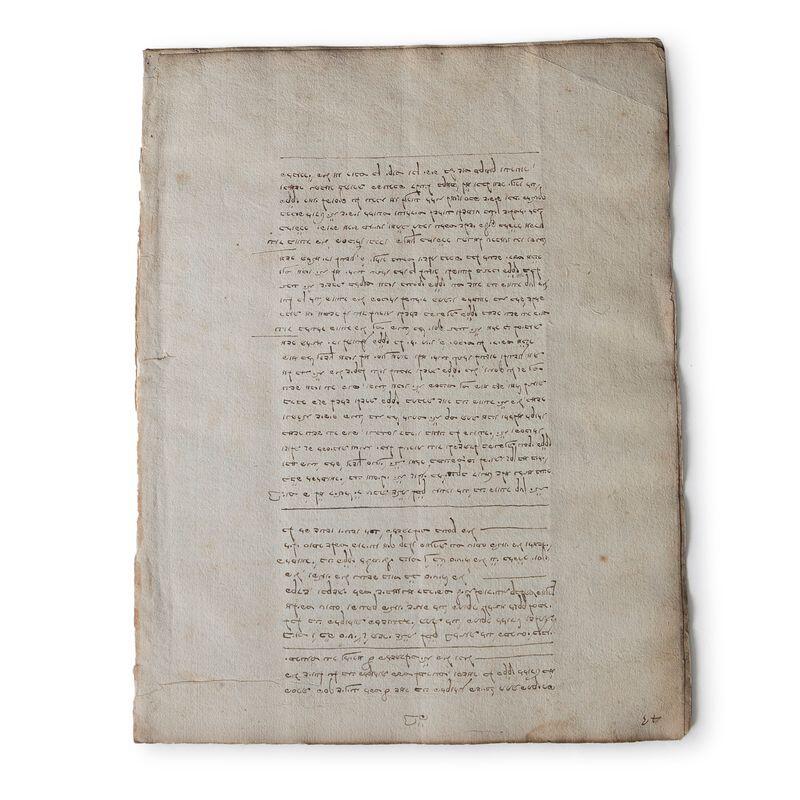
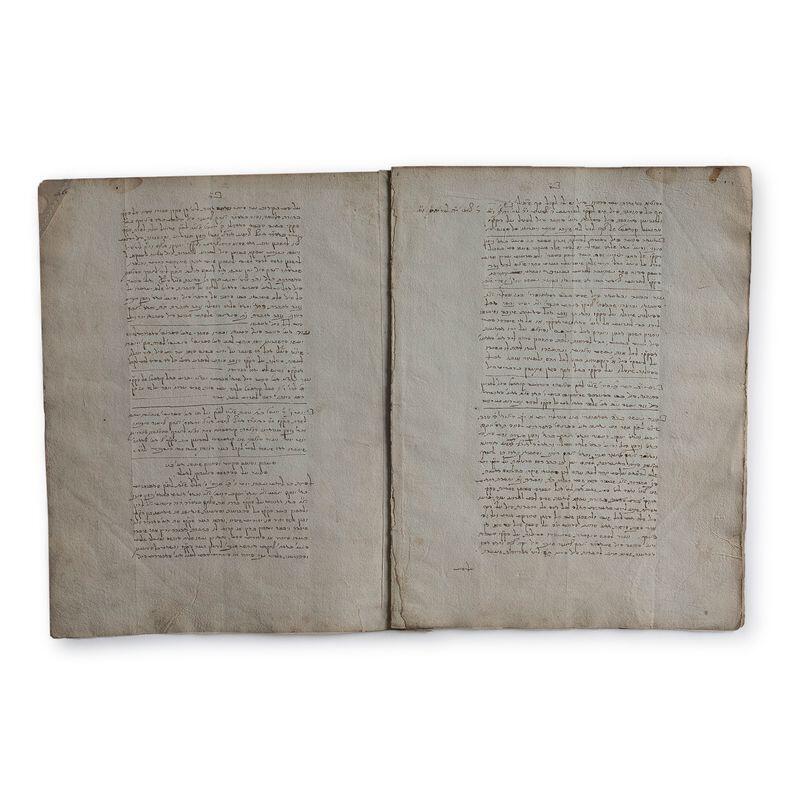
The first docket records a demand originating with the official Christian censor: the community was to nominate a suitable “מזקק”, the Jewish expurgator responsible for locating and removing passages prohibited by ecclesiastical authority. The communal leaders’ receipt of the notice is then formally documented. The entry belongs to a particularly fraught moment in Modenese Jewish history. The papal Inquisition had assumed jurisdiction over professing Jews in Modena and used the control and expurgation of Hebrew books to penetrate deeply into communal and intellectual life. In 1636, only shortly before these proceedings, leading Jewish scholars and merchants, including R. Aharon Berekhiah himself, were interrogated for possessing prohibited books.
Other minutes record the quieter transitions upon which communal life depended. The aging Gershon Sanguinetti could no longer perform his public duties in Asolo, and authorization was sought for his son Menahem to serve in his stead. At the same session, a similar request was presented on behalf of Yosef Saba, to be replaced by his son Shlomo. In a few concise lines, the protocol captures formal authority passing from father to son through the deliberate approval of the court and communal leadership.
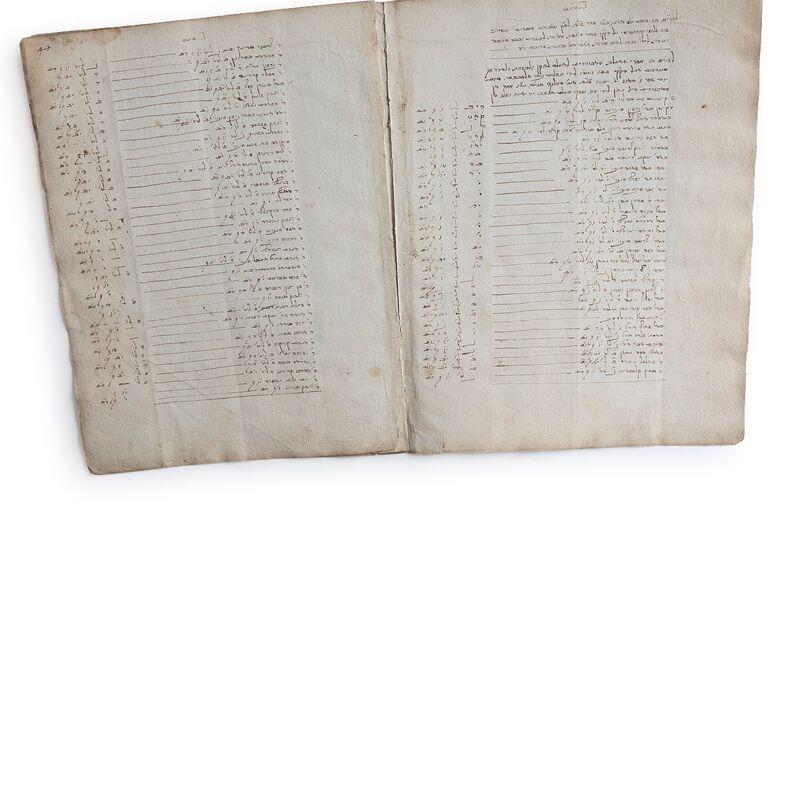
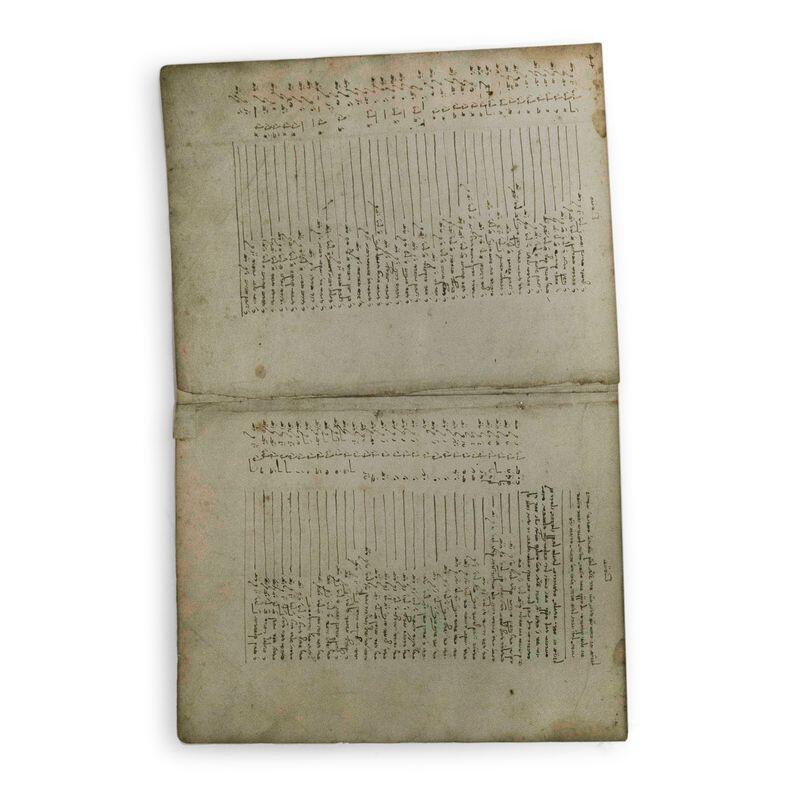
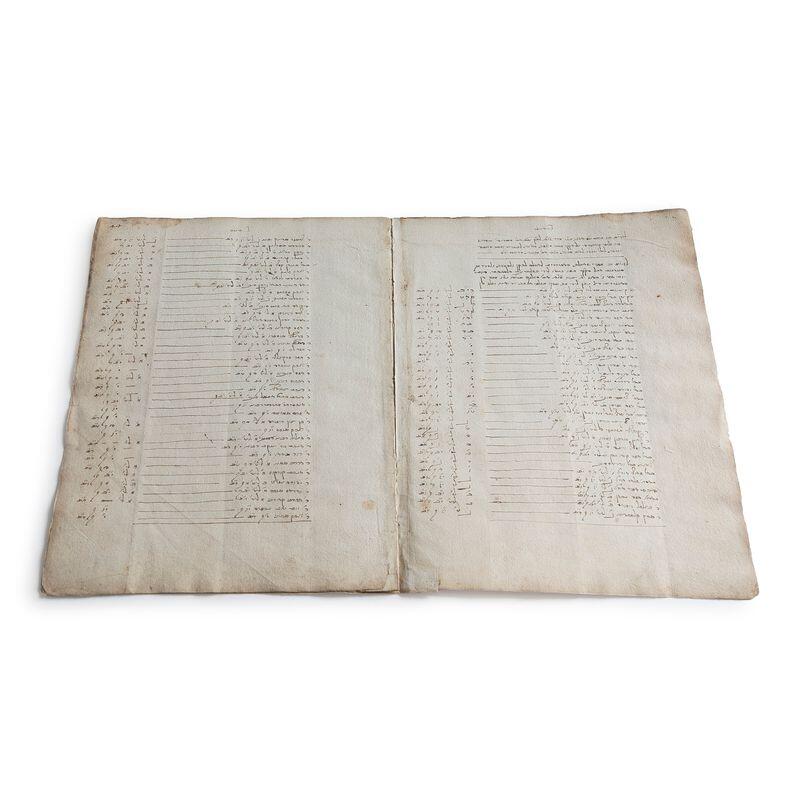
The manuscript then opens into an imposing fiscal record. Three men are elected as official “מבררים” and assessors of communal dues: Rabbi Nethanel ben Benjamin Trabotto, Rabbi Aharon Berekhiah ben Moses of Modena, and Rabbi Judah Aryeh Poggetto (פוייטו), also known as Leone Poggetti. A long roll follows, listing the members of the community and the amount imposed upon each. The names and figures continue across successive pages until the completed assessment is authenticated by the three rabbis, each signing in his own hand.
At their head stood R. Nethanel Trabotto of Modena (1568–1653), one of the commanding Italian halakhic authorities of his generation. Born in Ascoli and educated in Pesaro and Ferrara, he settled in Modena while still a young man and remained there for more than sixty years. He eventually served as rabbi of the community and head of its yeshivah, wielding an authority that extended far beyond the city. When communities elsewhere were divided over taxation, rabbinic appointments, synagogue music or fiercely contested halakhic questions, Trabotto was repeatedly summoned to intervene. While serving as an eminent local dayan, Trabotto simultaneously functioned as regional authority whose judgments were sought from Mantua to Senigallia.
The subject of this protocol was particularly characteristic of his public career. Trabotto had already participated in disputes over the allocation of communal taxes in Mantua, advised on the legality of committees appointed to assess them, and pressed the community to create a three-man commission empowered to settle claims against it. The present tax roll therefore catches him performing work that lay at the heart of Jewish government: converting a community’s collective obligation into individual assessments, one name and one household at a time.
Beside him appears the autograph signature of R. Aharon Berekhiah of Modena, disciple of R. Menahem Azariah of Fano and one of the great Italian kabbalists of the seventeenth century. His Ma’avar Yabbok, first printed in Mantua in 1626, became the classic Jewish guide to illness, death, burial, mourning and the soul’s passage from this world. Its prayers and rites entered Jewish practice across continents. Yet here the renowned mystic appears in a startlingly earthly setting. The man who charted the soul’s final journey is seated beside a tax ledger, helping determine the financial responsibilities of his neighbors and affixing his own signature to make the assessment official.
The juxtaposition is precisely what makes the manuscript so powerful. R. Aharon Berekhiah was not a mystic detached from ordinary life. Evidence indicates that he signed Trabotto’s rulings and may have held a formal rabbinic position under his authority; the present document supplies unusually vivid material confirmation of that role. His actual autograph, appearing beneath an official communal assessment, places one of the most influential kabbalists of early modern Italy inside the everyday governance of his city.
The third assessor, R. Judah Aryeh Poggetto (פוייטו / פוייטי; Leone Poggetti), was himself a central figure in Modena’s learned world. Trabotto ordained him in 1621; he served as the community’s scribe, signed numerous rulings with his teacher and left responsa of his own. Before attaining these communal responsibilities, Poggetti had served as tutor to the children of the influential Sanguinetti family and as rabbi of their synagogue, another reminder that the synagogue, school, merchant’s household and communal court were deeply interconnected institutions. He died in 1648.
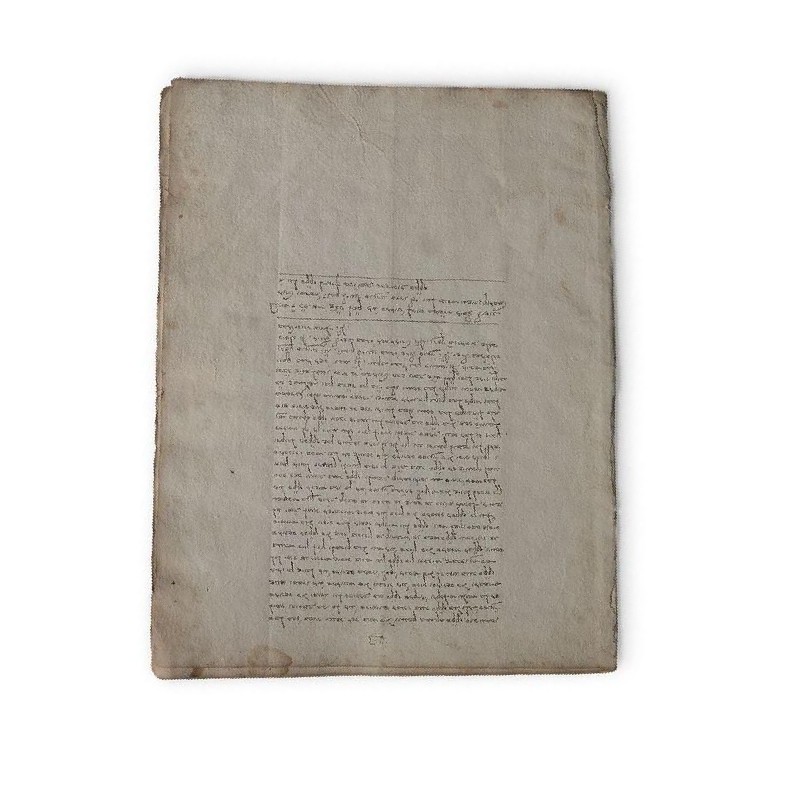
The final documents are copies of shtarei berurin, formal arbitration deeds by which disputing parties selected their judges and undertook to accept the resulting decision. One bears the signatures of R. Yosef Baruch of Urbino and a second Yosef. Urbino was Trabotto’s son-in-law and relative, a rabbi and physician who served in several Italian communities, translated works of astronomy and mathematics into Hebrew and subscribed many of Trabotto’s responsa. His appearance here completes an unusually intimate portrait of the court: master, disciples, colleague and son-in-law all moving through the same legal and communal world.
What survives is therefore far more than a tax list or a miscellany of legal forms. It is a sequence of scenes from the government of Jewish Modena on the eve of the ghetto: the Church reaching into the Hebrew library; elderly officeholders surrendering their posts; judges distributing the weight of taxation; private litigants creating courts of their own choosing; and, at the bottom of the page, the unmistakable signatures by which some of the greatest rabbis and kabbalists of the age turned decisions into law.
Several large-format manuscript leaves in Italian Hebrew cursive, written in multiple hands. Includes formal minutes, two-column and ruled fiscal schedules listing numerous names and assessments, arbitration deeds and autograph signatures. Broad margins, original folds, staining and evidence of sustained administrative use. Most notably signed by R. Nethanel Trabotto, R. Aharon Berechiah of Modena and R. Judah Aryeh Poggetto.
Reference: Bonfil, The Rabbinate in Renaissance Italy (Jerusalem 1979) ch. 5; Simonsohn, History of the Jews in the Duchy of Mantua (Jerusalem 1977) ch. 5; Aron-Beller, Jews on Trial (2011) 17-86; Francesconi, Invisible Enlighteners (2021) 97–98; Shulvass, The Jews in the World of the Renaissance (1973) chs. 2-3; Green, Asufot 2 (1988) 91-156.
Condition: very good condition
Opening price: $9000
Share this lot: