Auction 1 - Rare Hebrew Books, Manuscripts & Rabbinic Letters
Lot 37:
Description
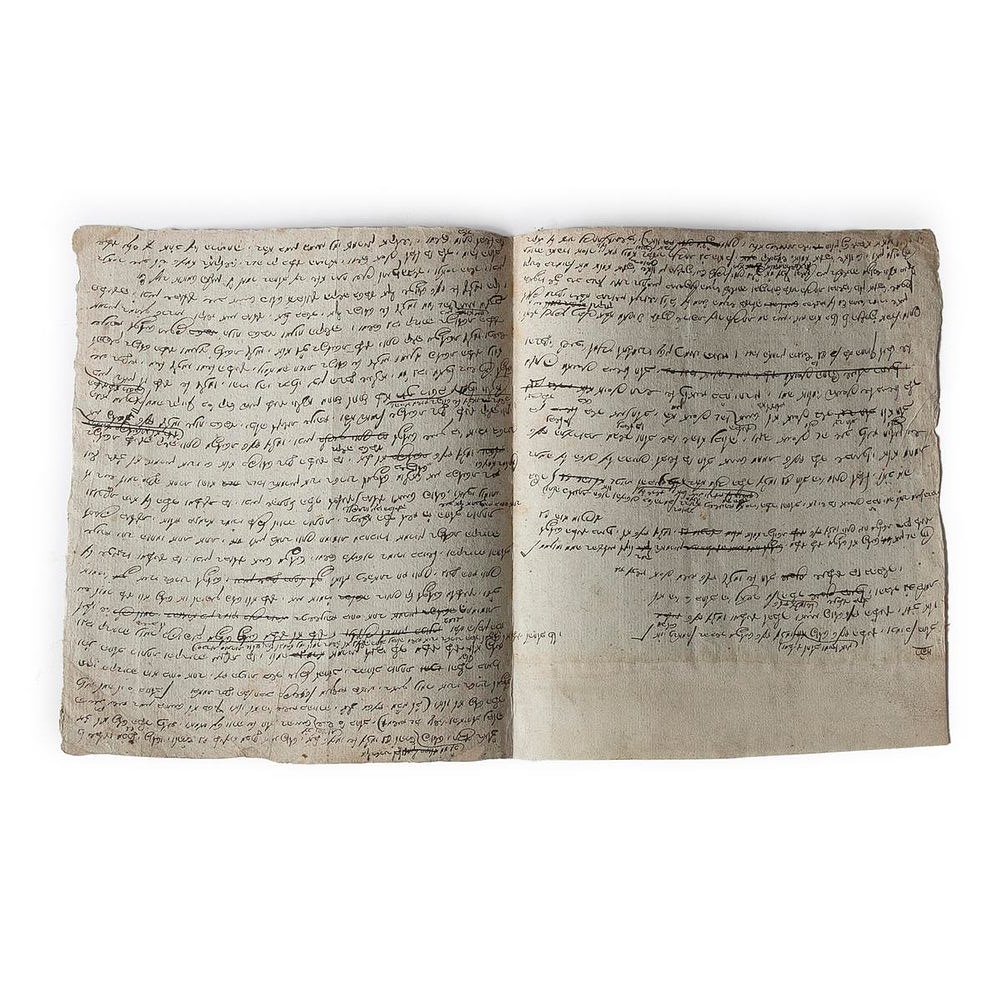
THE MODLIN FORTRESS INCIDENT — HAGALAH WITH MILK
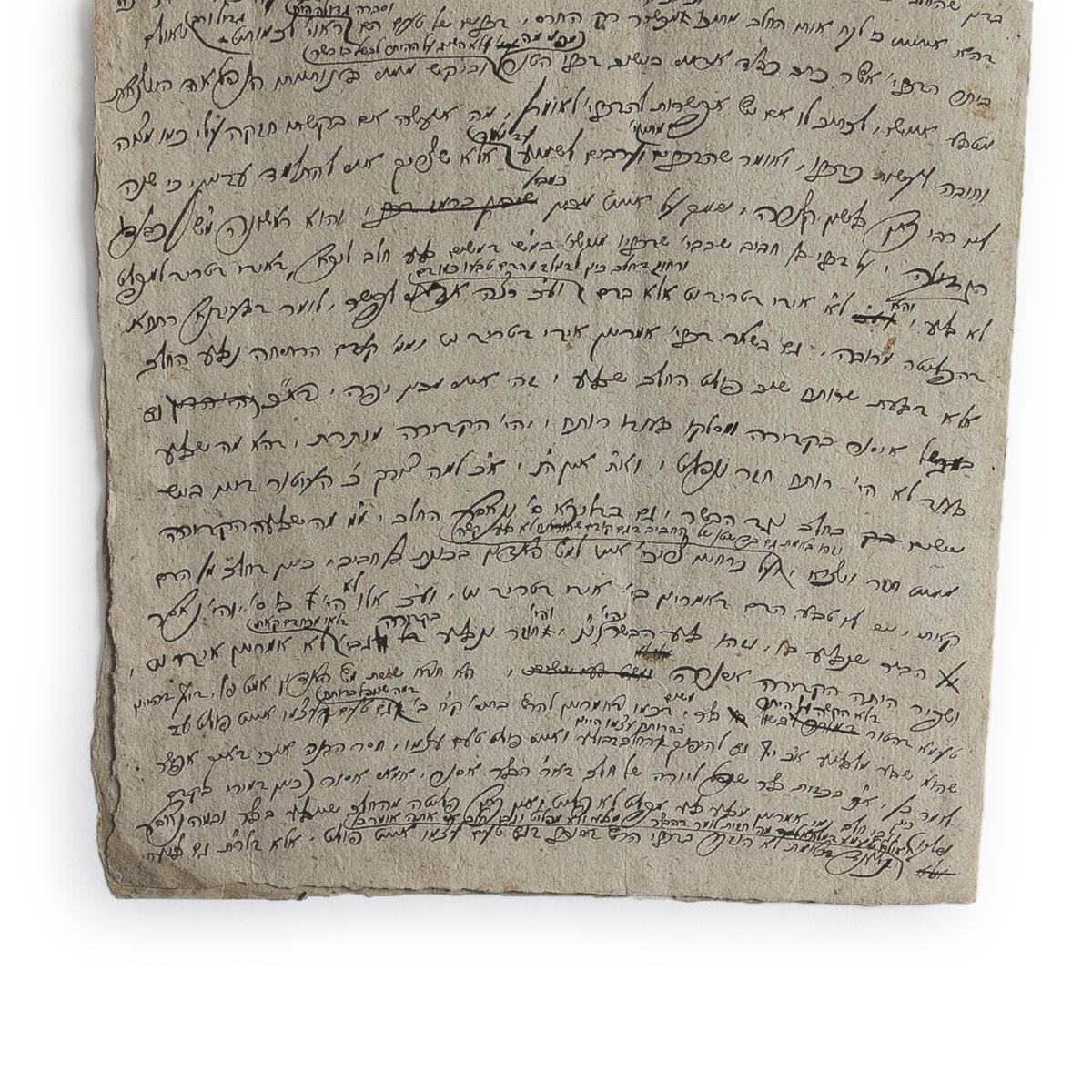
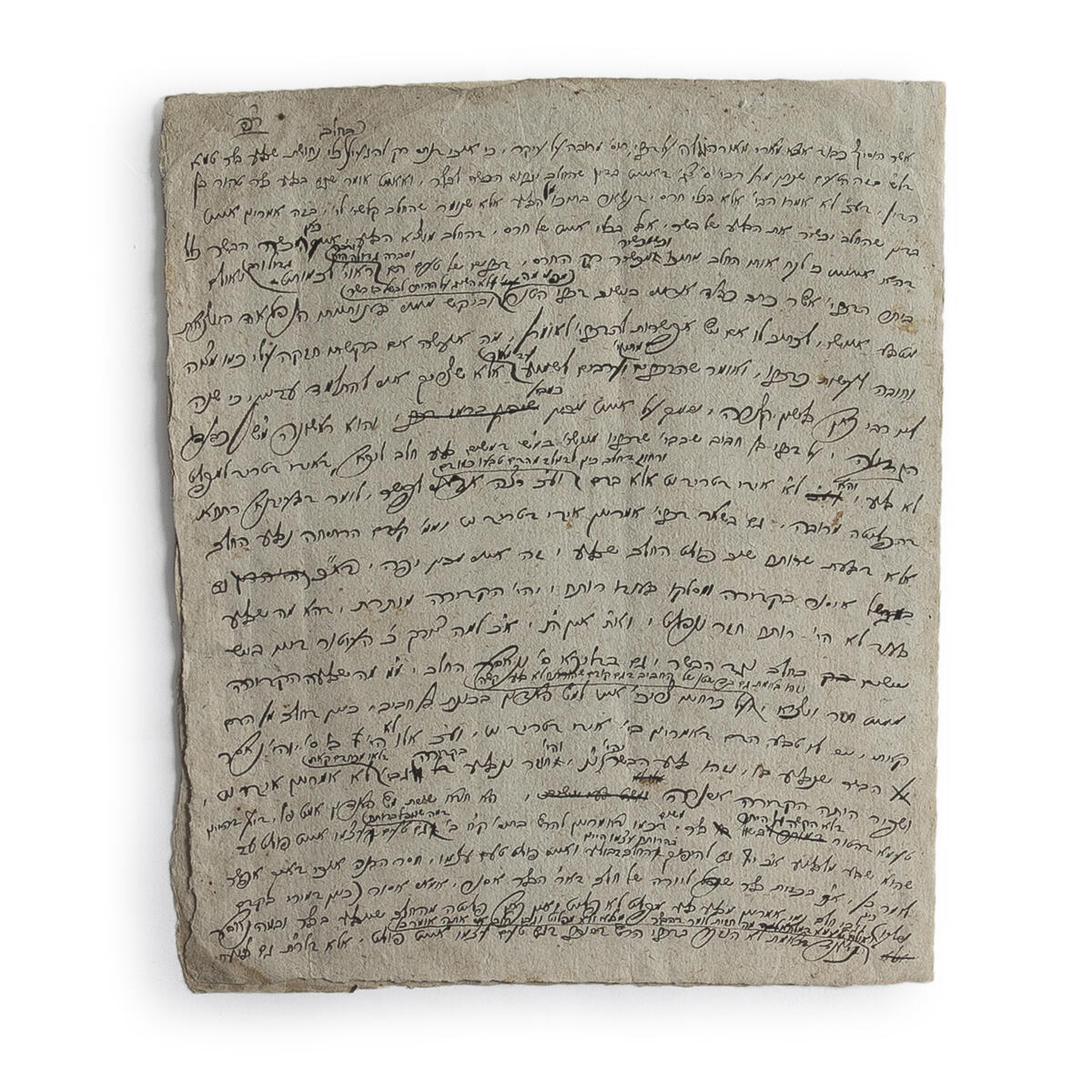
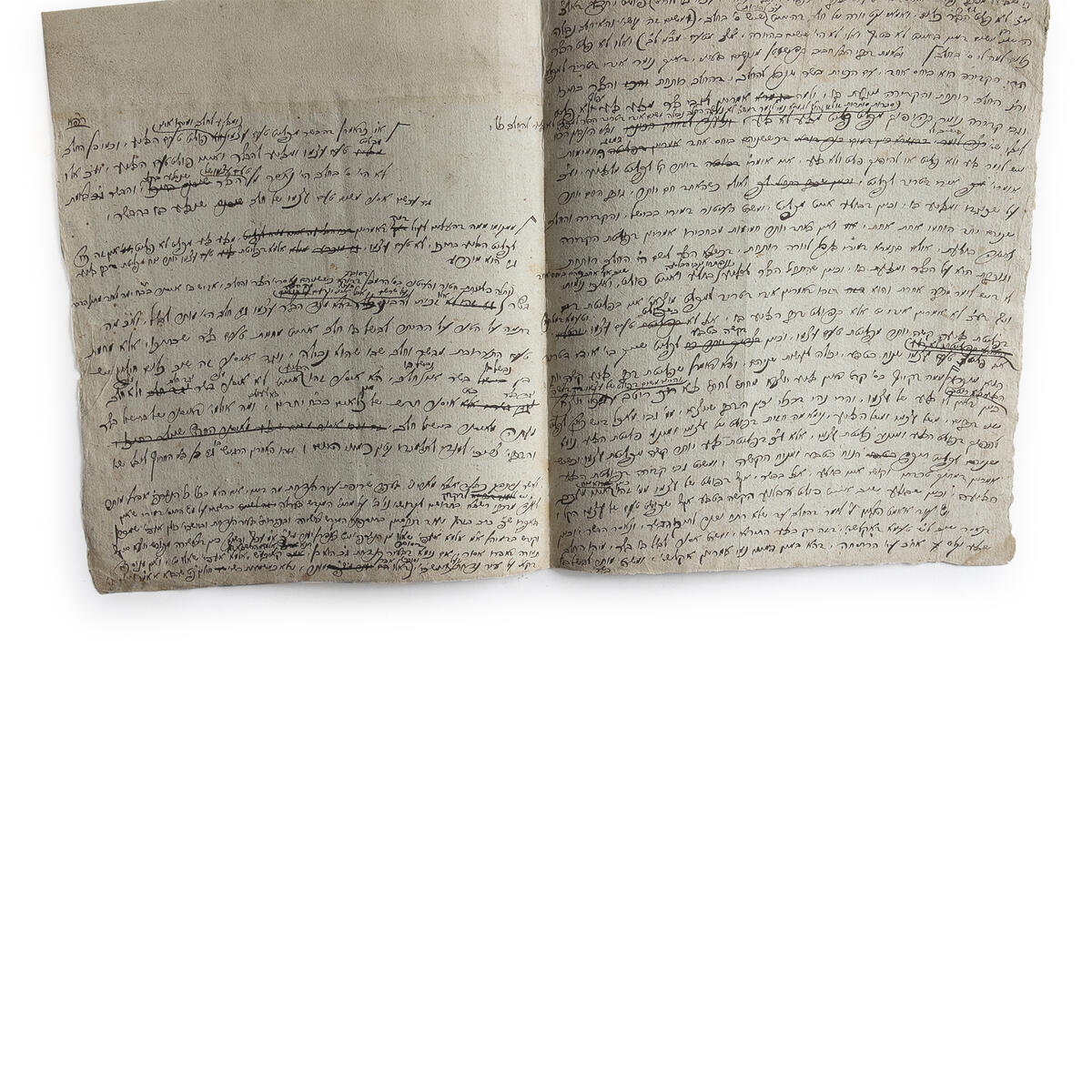
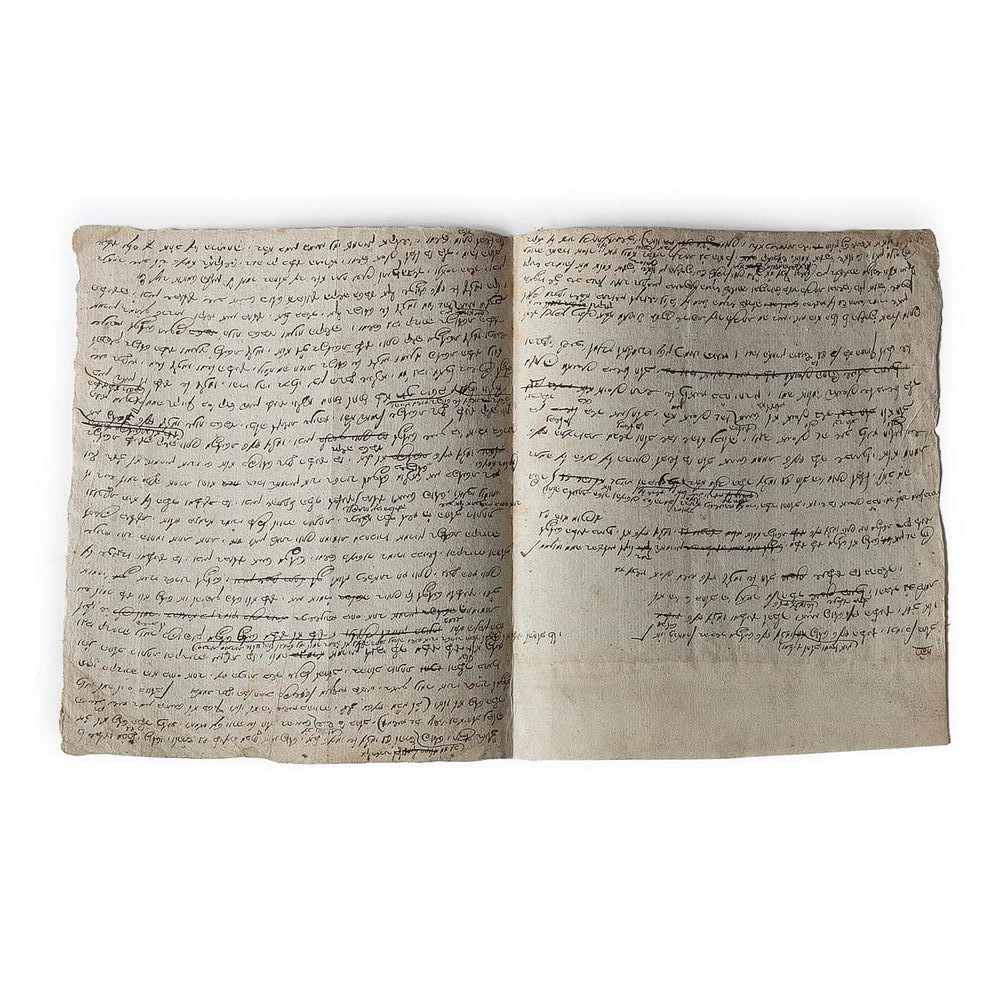
Three densely written pages, in the autograph hand of R. Shlomo Eiger (1785/86–1852), extensively revised with cancellations, interlinear additions and marginal insertions. Apparently working drafts from the celebrated halachic exchange with his father, R. Akiva Eiger, concerning an unusual question of hagalah which arose while R. Shlomo was staying at the fortress of Modlin.
The question didn’t begin in the study but on the road.
During a stay at Modlin Fortress, some 25 miles north of Warsaw, at the confluence of the Narew and Vistula Rivers, R. Shlomo Eiger wished to have coffee prepared before daybreak. The neighboring residents were still asleep, and the woman of the inn explained that no water was then obtainable; the fortress gates were closed, and water could only be fetched from the Narew, upon which Modlin stands. Meanwhile, military personnel stationed there had been cooking pork, and the utensil needed for R. Shlomo’s coffee had been rendered non-kosher through contact with the hot pork cooking.
With no water available for hagalah, R. Shlomo arrived at an ingenious practical solution: could the utensil instead be kashered in boiling milk, with sufficient milk to nullify the forbidden taste expelled from the vessel?
What began as an improvised ruling before dawn at a military fortress developed into a sustained halachic correspondence between two of the great minds of nineteenth-century Polish Jewry. The exchange was eventually printed in Teshuvot R. Shlomo Eiger, nos. 15–19, while R. Akiva Eiger’s side of the discussion appears independently in his own responsa, nos. 83–84.
The present leaves bring us behind the polished printed texts and into the actual process of their composition.
The leaves are numbered in manuscript רפ-רפא evidently surviving from a considerably larger manuscript sequence. They are emphatically not fair copies: passages are crossed through and rewritten, phrases inserted between lines, arguments expanded in the margins, and formulations repeatedly reconsidered. Their appearance strongly suggests working drafts in which R. Shlomo was organizing and refining his response, rather than the clean copy that would presumably have been dispatched to his father.
The identification can be demonstrated directly. At the head of leaf רפ, R. Shlomo writes:
Share this lot: