Auction 1 - Rare Hebrew Books, Manuscripts & Rabbinic Letters
Lot 36:
Description
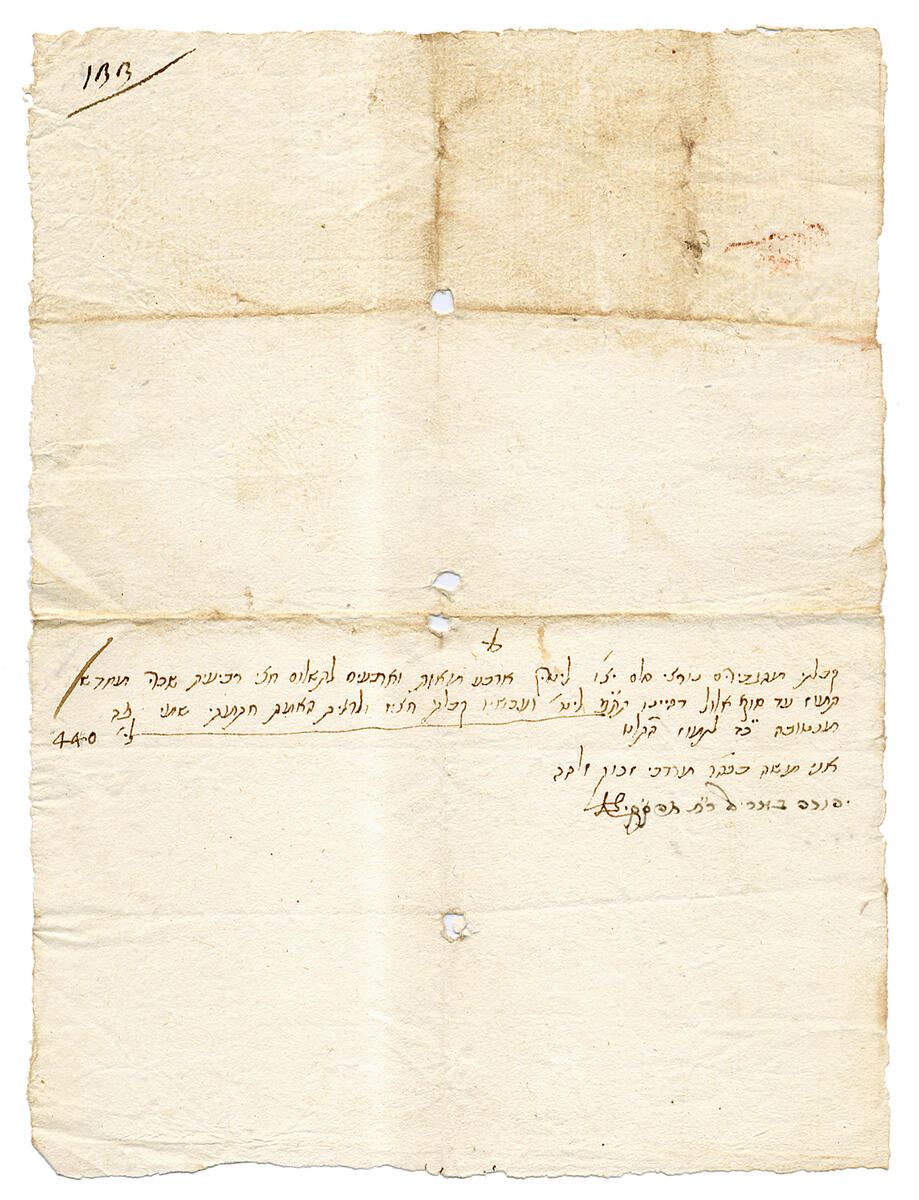
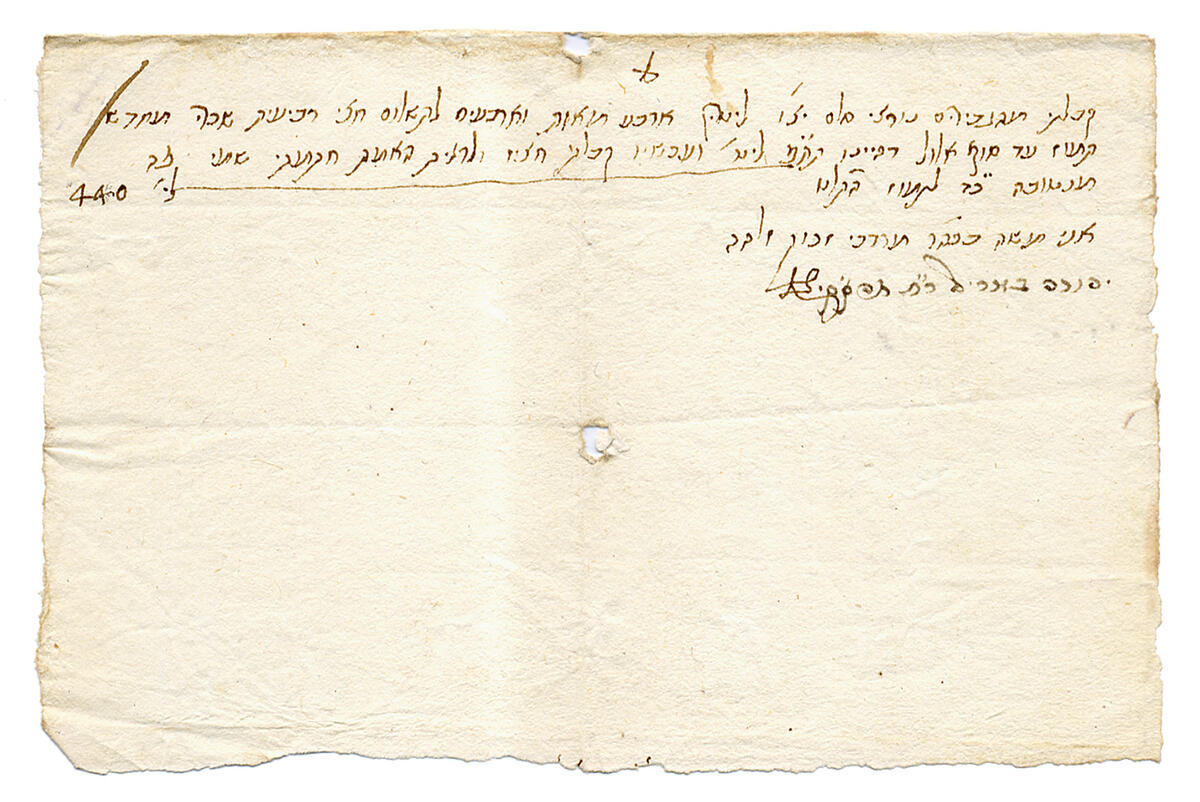
Mantua, 22 Tammuz 5439 (1679).
For generations, students have encountered Rabbi Moshe Zacuto through the worlds he sought to illuminate, Lurianic Kabbalah, biblical exegesis, halakhic responsa, Hebrew poetry, and the vast manuscript legacy that secured his place among the greatest Jewish scholars of the seventeenth century. This document preserves a very different moment. Not a mystical teaching or legal ruling, but the ordinary act that made all of those possible: the chief rabbi of Mantua quietly acknowledging receipt of his quarterly salary.
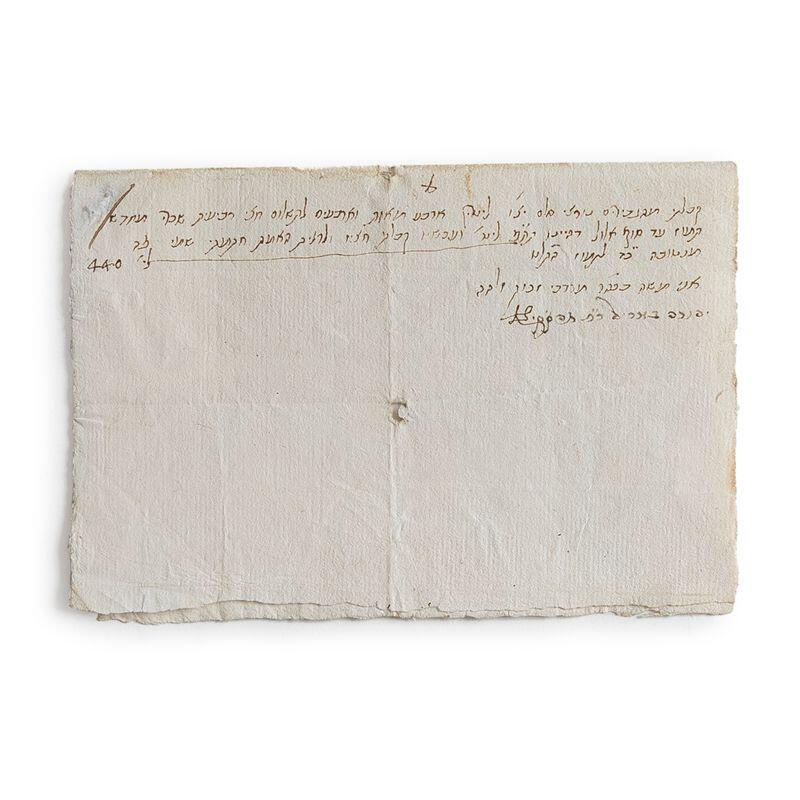
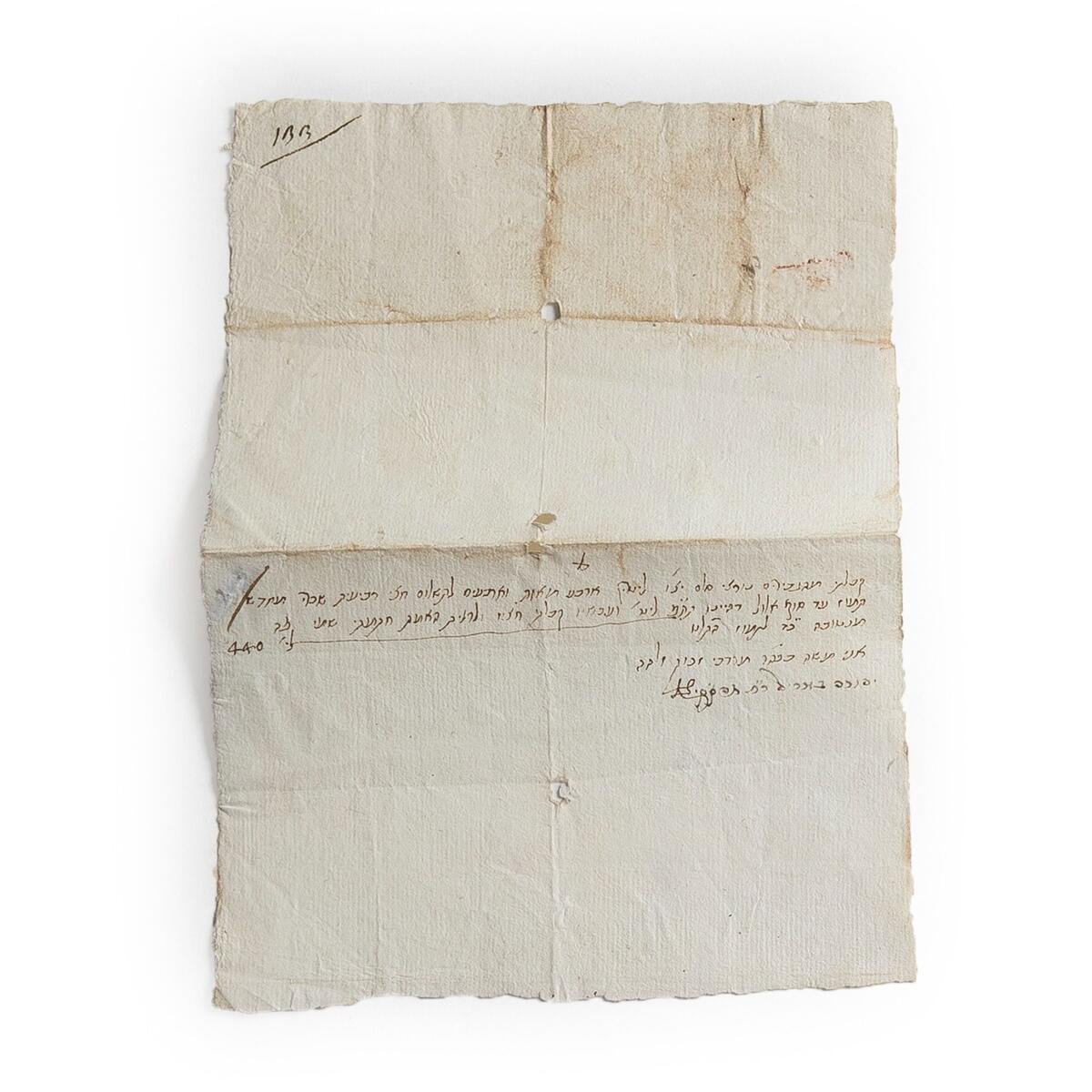
Written and signed entirely in Zacuto’s hand, the receipt records that he had received 440 lire, paid on account of one-half of the salary owed to him by Mantua’s Jewish congregations for the quarterly period extending from Tammuz through Elul. The payment was received from a member of the prominent Norsa (Heb. נורצי) family, whose banking enterprise and philanthropy made the family one of the principal financial and communal pillars of Jewish Mantua for centuries. Their support extended well beyond commerce; members of the family helped shape the city’s religious and communal institutions and maintained close ties with Mantua’s rabbinic leadership.
Those ties were more than financial. During Zacuto’s tenure in Mantua, Rabbi Ḥayyim ben Jehiel Norsa served alongside him on the rabbinical court. Together they helped draft the communal statutes of Mantua in 1677, and after Zacuto’s death, Ḥayyim Norsa succeeded, with Zacuto’s approval, as one of the city’s leading rabbinic authorities. Some of Ḥayyim Norsa’s responsa were even preserved by Zacuto himself. The appearance of the Norsa family in the present document therefore reflects an established relationship between one of Mantua’s foremost rabbinic figures and one of its most influential Jewish families, whose fortunes and communal leadership were closely intertwined.
The receipt is countersigned by Rabbi Yehudah Briel, then serving as dayan in Mantua and later himself one of Italy’s foremost rabbinic authorities. His signature beneath Zacuto’s transforms what might otherwise appear a routine administrative record into a remarkable convergence of personalities: the Ramaz, his future successor, and a representative of the city’s most prominent Jewish family, all meeting upon a single sheet of paper generated in the ordinary course of communal life.
Administrative documents were created to be used and discarded. Yet precisely because they were never intended for posterity, they often preserve history at its most immediate. Here, one of Judaism’s greatest mystics steps briefly out of the world of kabbalistic manuscripts and responsa to sign for his wages—a fleeting moment of everyday reality that has outlived the institutions, treasuries, and hands through which it once passed.
Condition: very good condition
Opening price: $6,500
Share this lot: