Auction 1 - Rare Hebrew Books, Manuscripts & Rabbinic Letters
Lot 45:
Description
An important and highly intriguing provenance copy of R. Aaron ibn Hayyim’s monumental commentary on the Sifra from the library of R. Yechezkel Landau, author of Noda BeYehudah. Bearing his unique signature inscription מסעדתך, the name יחזקאל rendered in Atbash, together with an ownership inscription of R. Hirsch Shidlov.
The use of ciphers and concealed names as signatures has a surprisingly old Jewish pedigree. Already in the Genizah period, personal signature devices incorporated letter substitution, including Atbash. Centuries later, the otherwise innocuous-looking מסעדתך served precisely this purpose for the Noda BeYehudah: מ-ס-ע-ד-ת-ך converts by Atbash, letter for letter, into י-ח-ז-ק-א-ל.
The authenticity of this signature has been confirmed by Harav Shmerel Zitronenbaum, well-known expert and maven on antique rabbinic manuscripts and handwritten Torah novellae.
The attribution is verified as well by definitive provenance evidence. A copy of the sefer Korban Netanel belonging to R. Yechezkel Landau bears an explicit ownership inscription by his son identifying the book as his father’s; immediately beneath it appears מסעדתך, alongside an autograph scholarly gloss of the Noda BeYehudah. A second documented R. Landau volume, Knesset HaGedolah, likewise bears מסעדתך, together with inscriptions of his son and sons-in-law establishing his ownership.
It is that second volume which provides the conclusive additional link to the present copy. At the top of its title page appears the ownership inscription מר’ הירש שידלוב. The present Korban Aharon bears the same striking combination: מסעדתך together with הירץ [הירש] שידלוב. Because two different books carry this unusual pair of provenance marks, and one of them is independently documented as belonging to the Noda BeYehudah, the identity of the owner is firmly established.
The cipher was a distinct hallmark of his circle. While R. Yechezkel Panet, author of Mareh Yechezkel, who studied in Prague in the circle of the Noda BeYehudah’s son R. Shmuel Landau, also used מסעדתך as an ownership mark, his surviving examples are written in a completely different hand from the inscription here. There was a clear family practice for concealed signatures: the Noda BeYehudah’s son R. Yisrael Landau hid his own name on the title page of Chok LeYisrael through initials and final letters, and again concealed הקטן ישראל הלוי לנדא מפראג as an acrostic in his introductory poem.
The documented use of מסעדתך in multiple books from Landau’s library, combined with the extraordinary recurrence of Hirsch Shidlov + מסעדתך in both the present volume and the independently authenticated Noda BeYehudah copy, reaffirms the authenticity of this attribution.
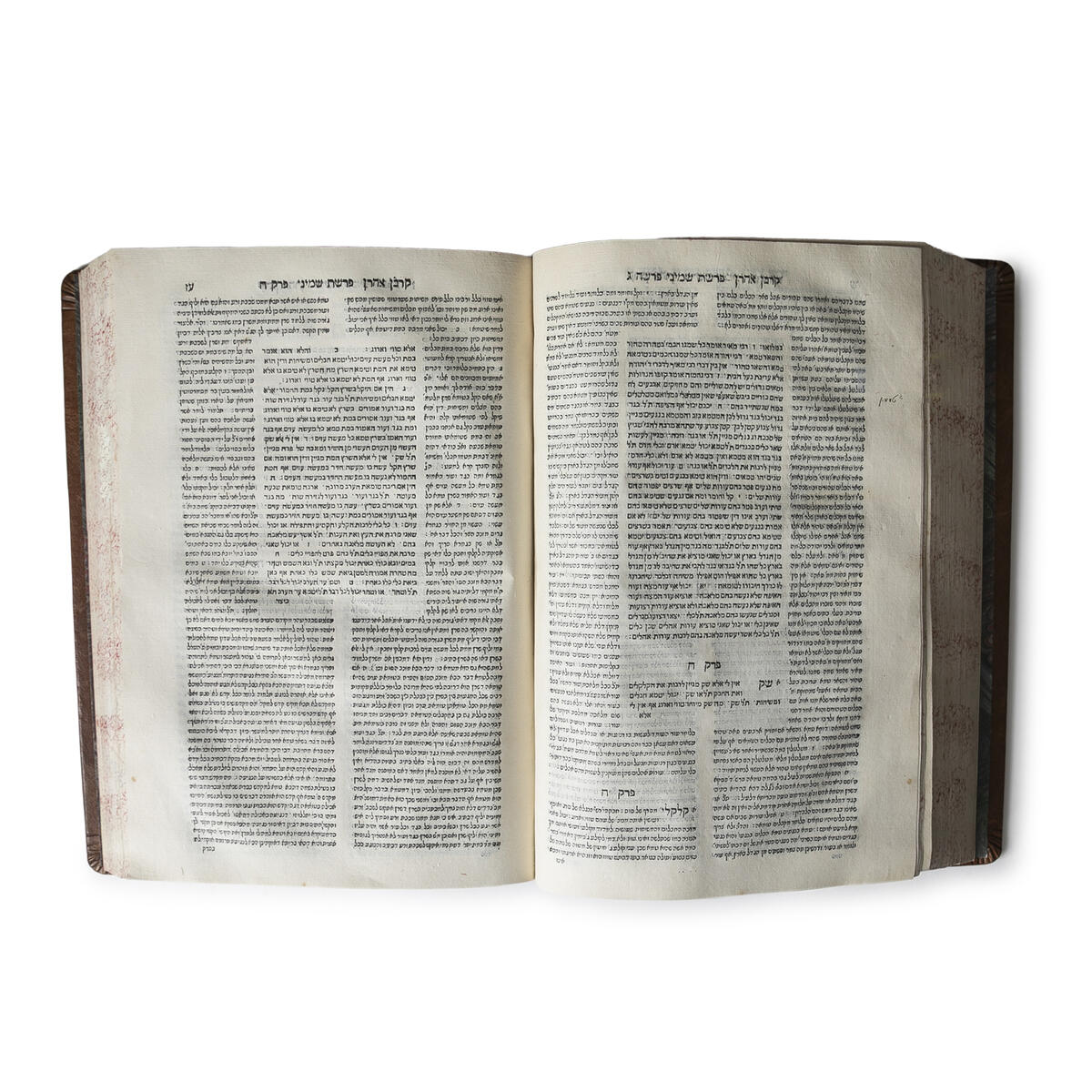
The book itself is worthy of its remarkable history. R. Aaron ibn Hayyim (1545–1632), one of the leading sages of Fez, travelled to Venice to bring his works to print. His Korban Aharon is the great early commentary on Sifra/Torat Kohanim, preceded by Middot Aharon, his extensive treatment of R. Ishmael’s thirteen hermeneutical principles, described by Heller as possibly the most thorough early exposition devoted to the subject. The two works account for the separate foliation of the volume.
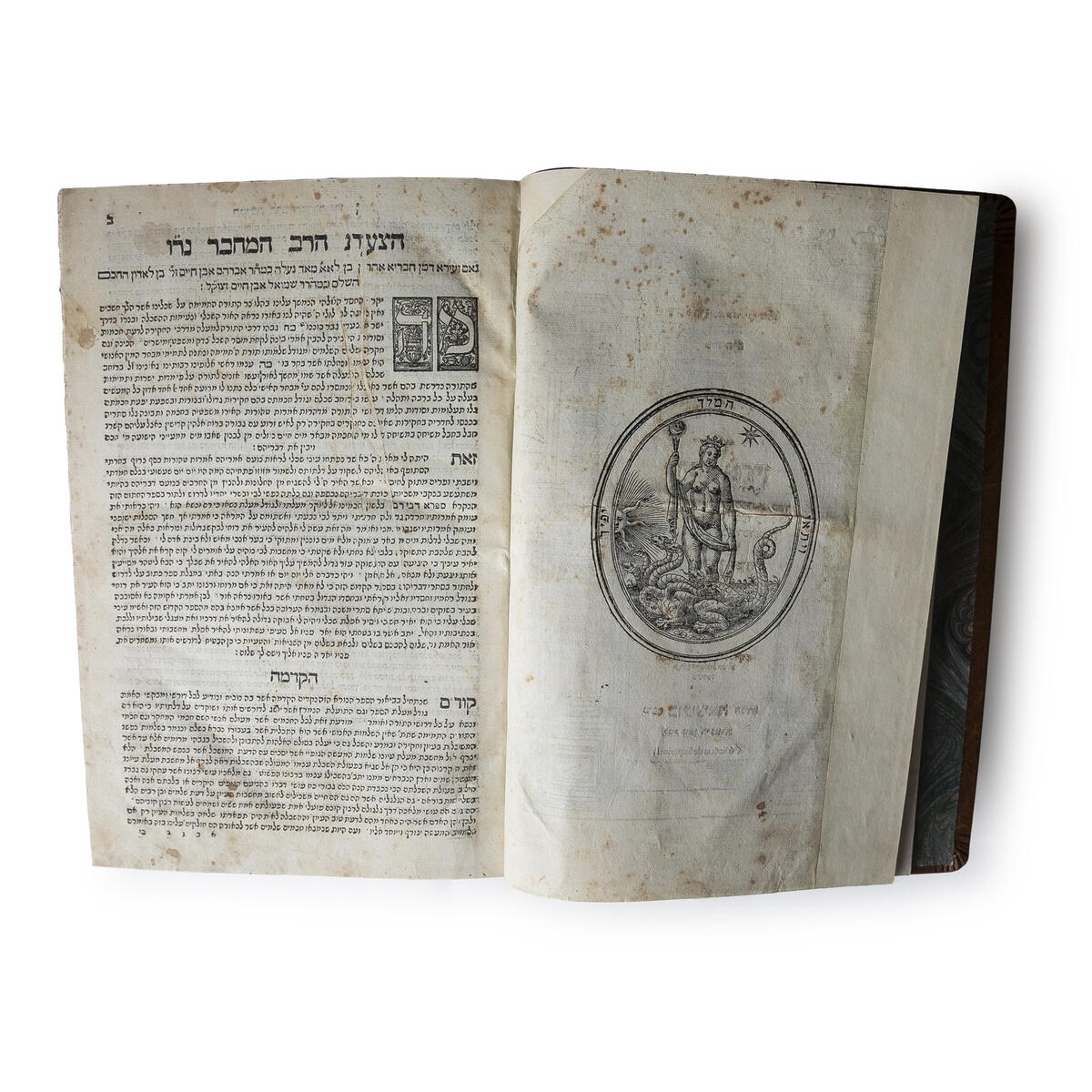
An additional curiosity appears on the verso of the title page: a remarkable Venetian printer’s device depicting a partially nude crowned female figure standing above a seven-headed dragon, accompanied by ויתאו המלך יפיך (Psalms 45:12). The same striking device had previously appeared in the celebrated Venice Rambam of 1574–1575, printed at the Bragadin press, and its appearance here is exceptionally rare. This being the Noda BeYehudah’s copy, the very leaf bearing his discreetly encrypted name preserves on its reverse one of the more unexpected images found in early rabbinic printing, which took its place in the great Prague posek’s library.
Venice: Giovanni di Gara, 1609–1611.
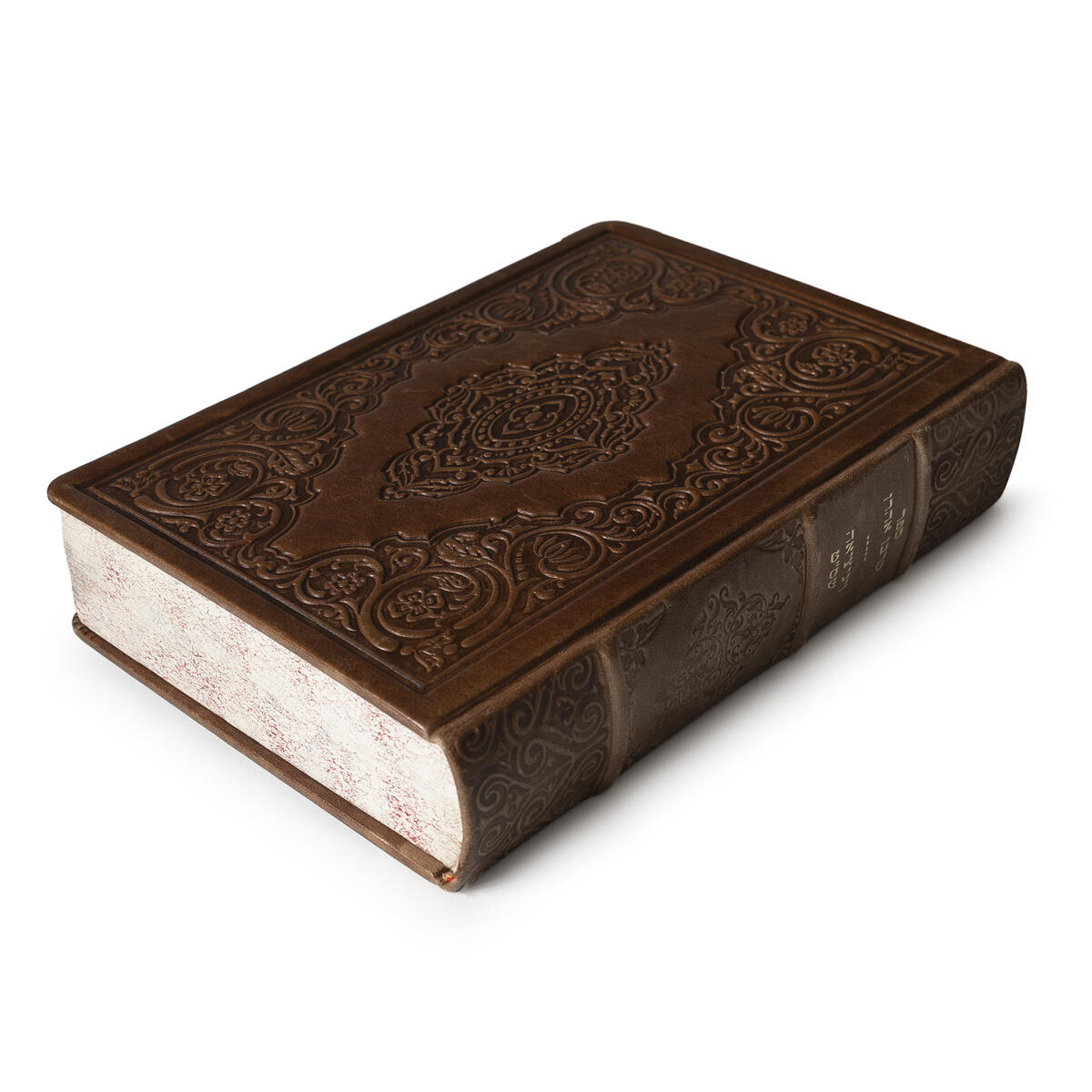
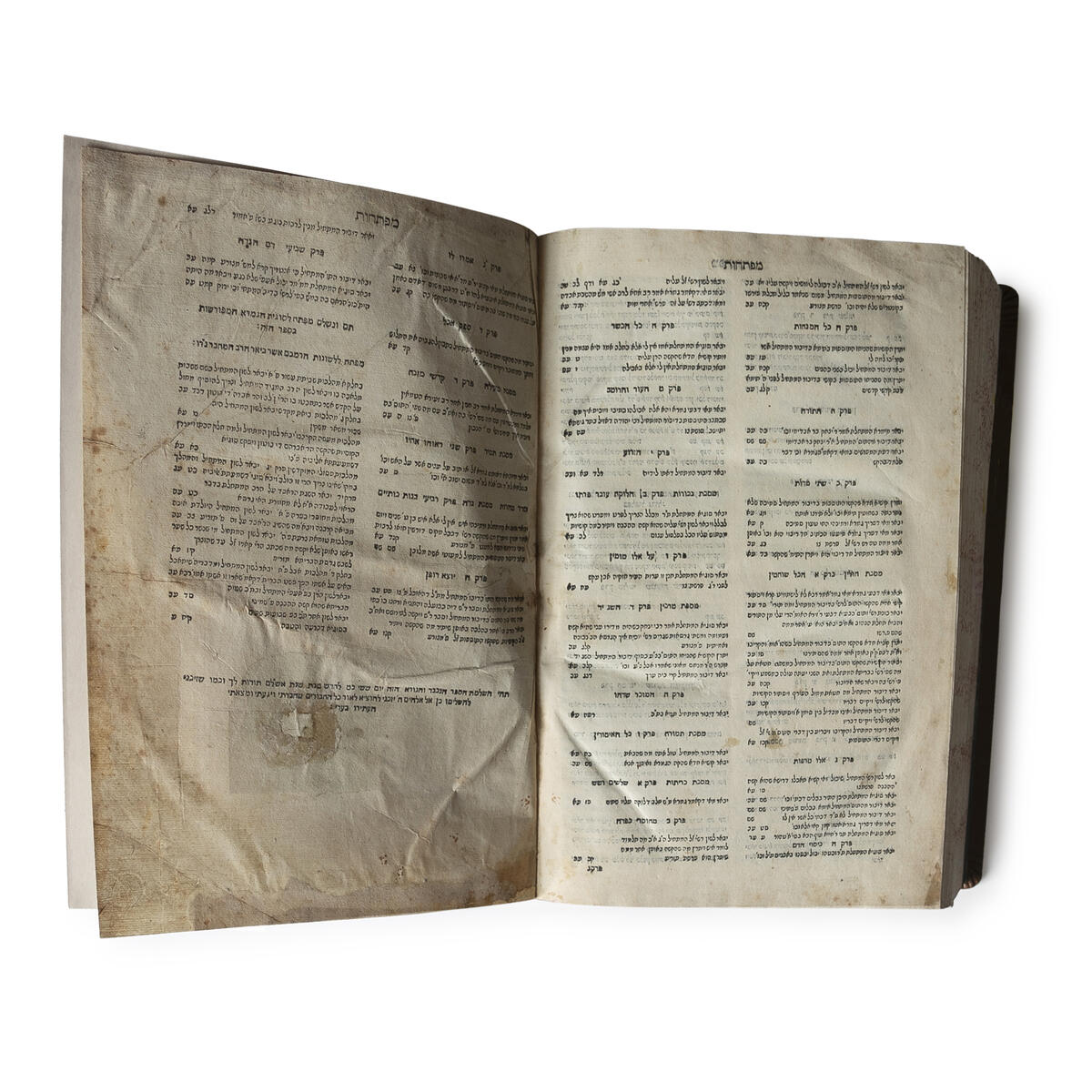
Folio. 139; 302; [4] leaves. Complete. Middot Aharon followed by the separately foliated Korban Aharon on Sifra and four unnumbered index leaves. Left side of title page repaired. Scattered staining and signs of use. A handful of manuscript annotations in at least two different rabbinic hands, including textual notes as well as learned marginal glosses. Later handsome full-leather binding, richly embossed with floral and arabesque ornament and central medallion; decorated spine lettered in gilt.
References: Bareket, Hatimot ve-itturei hatimot 117–128; Heller The Seventeenth Century Hebrew Book 24.
Opening price: $12,000
Share this lot: