Auction 1 - Rare Hebrew Books, Manuscripts & Rabbinic Letters
Lot 51:
Description
A “hidden light” emerges from the manuscripts of Ramhal’s disciples. Four works preserved by his intimate Amsterdam circle for decades, published together in 1783, culminating with Or ha-Ganuz, the first of Ramhal’s Kabbalistic writings to reach print.
When Moshe Chaim Luzzatto arrived in Amsterdam in 1735, he brought with him considerable fame, and considerable baggage. The extraordinary episode of the maggid, the mystical compositions it had inspired, and the bitter controversy that followed had already forced Ramhal to undertake that he would neither teach nor write Kabbalah. Amsterdam offered a new setting. Among the Portuguese Jews who gathered around him, Ramhal continued to teach, now turning his attention to works that could communicate his intellectual world without openly teaching the esoteric system that had caused him so much trouble.
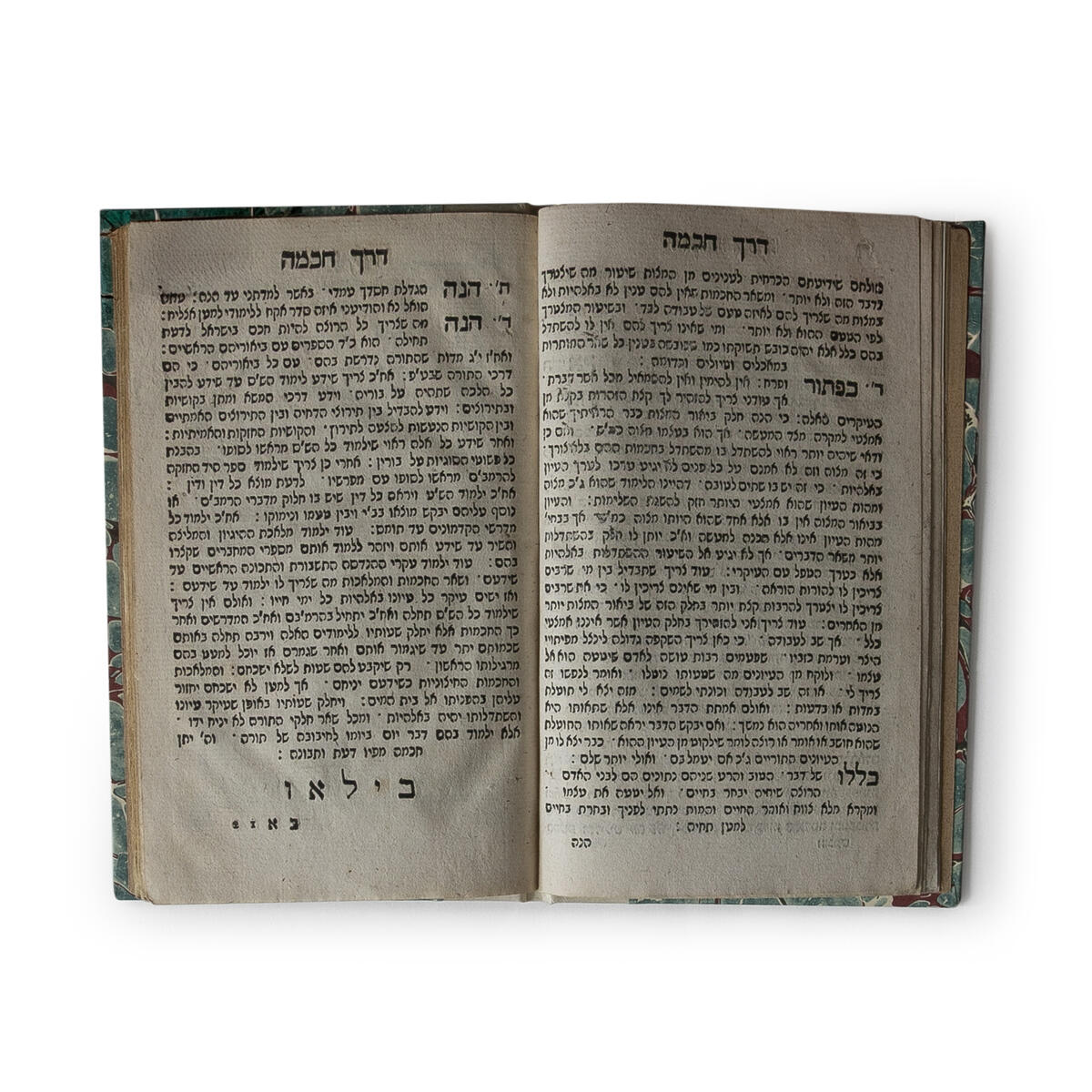
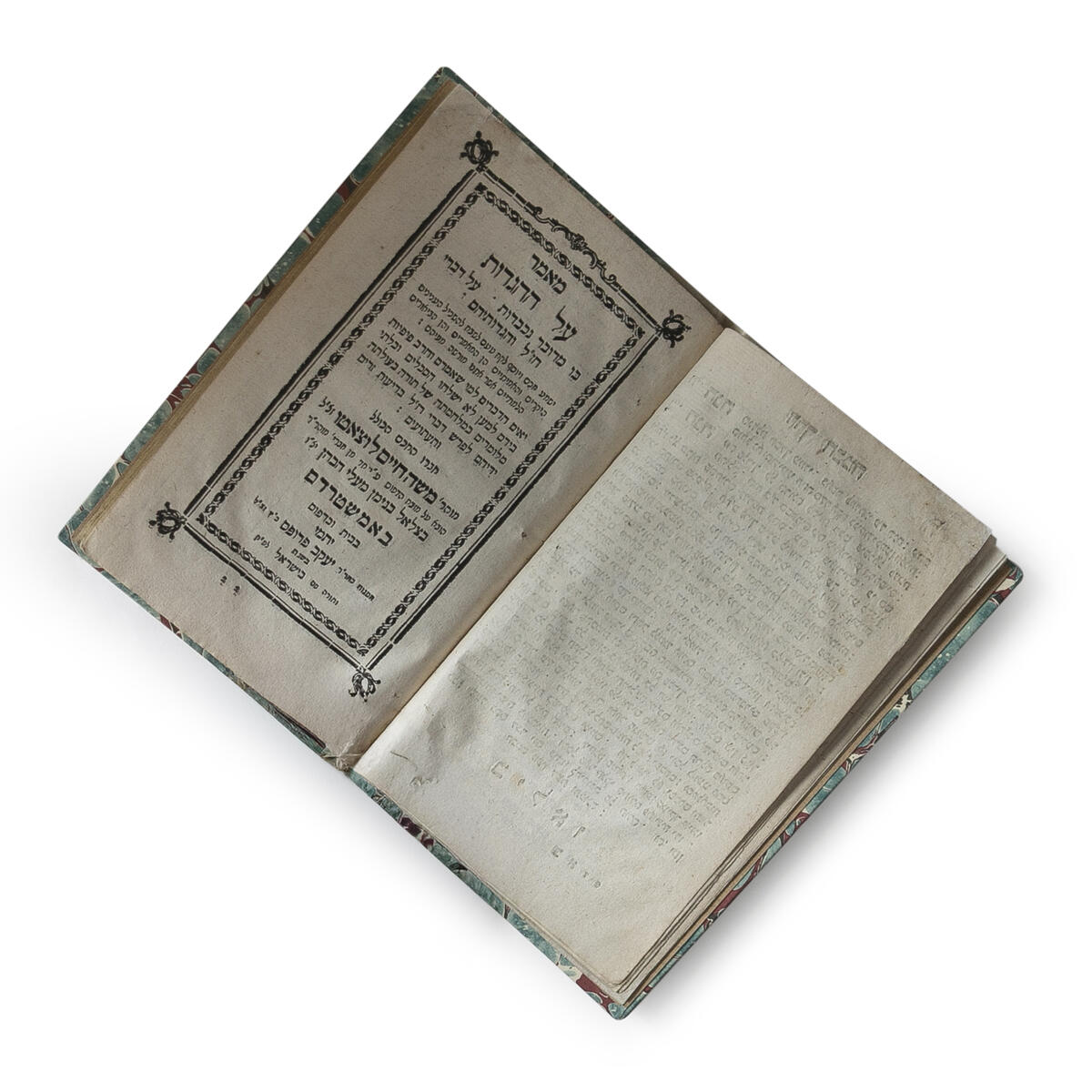
One product of this period was Derekh Hokhmah, a dialogue between master and disciple addressing a deceptively simple question: beyond Torah itself, what should a person study, and how should those branches of knowledge be approached? The work contains no overt Kabbalah and appears to have been carefully fashioned for Ramhal’s Portuguese students in Amsterdam. Two short treatises naturally accompany it. Ma’amar al ha-Haggadot explains the proper approach to the difficult and allegorical sayings of Chazal, while Ma’amar ha-Ikkarim sets out the fundamentals of Jewish belief, including God, prophecy, providence, Torah, reward and punishment, and the Messiah. Their appearance together was deliberate. The three works complement one another, presenting something of a compact program for the student seeking to understand Torah, its teachings, and its underlying principles.
Yet none of them appeared during Ramhal’s lifetime. The manuscripts remained in Amsterdam with his disciples and admirers. Decades passed. Among those preserving Ramhal’s writings was his disciple David Franco Mendes, in whose possession a cache of seven unpublished works survived. Decades later they caught the attention of R. Benjamin HaKohen Me‘eli, a Jerusalem-born scholar and emissary of Tiberias who had settled in Amsterdam and joined its rabbinate. Me‘eli persuaded Mendes to open his manuscript treasury, and in 1783 brought four of its works to press, with plans to publish the remaining three. Eventually R. Benjamin Me‘eli HaKohen encountered this small manuscript treasury and persuaded Mendes to allow the texts to emerge from obscurity. Four were selected for publication in 1783, with the remaining three intended to follow. There is something particularly apt in the language surrounding their appearance: writings that had remained hidden in a disciple’s possession for years were finally being brought into the light.
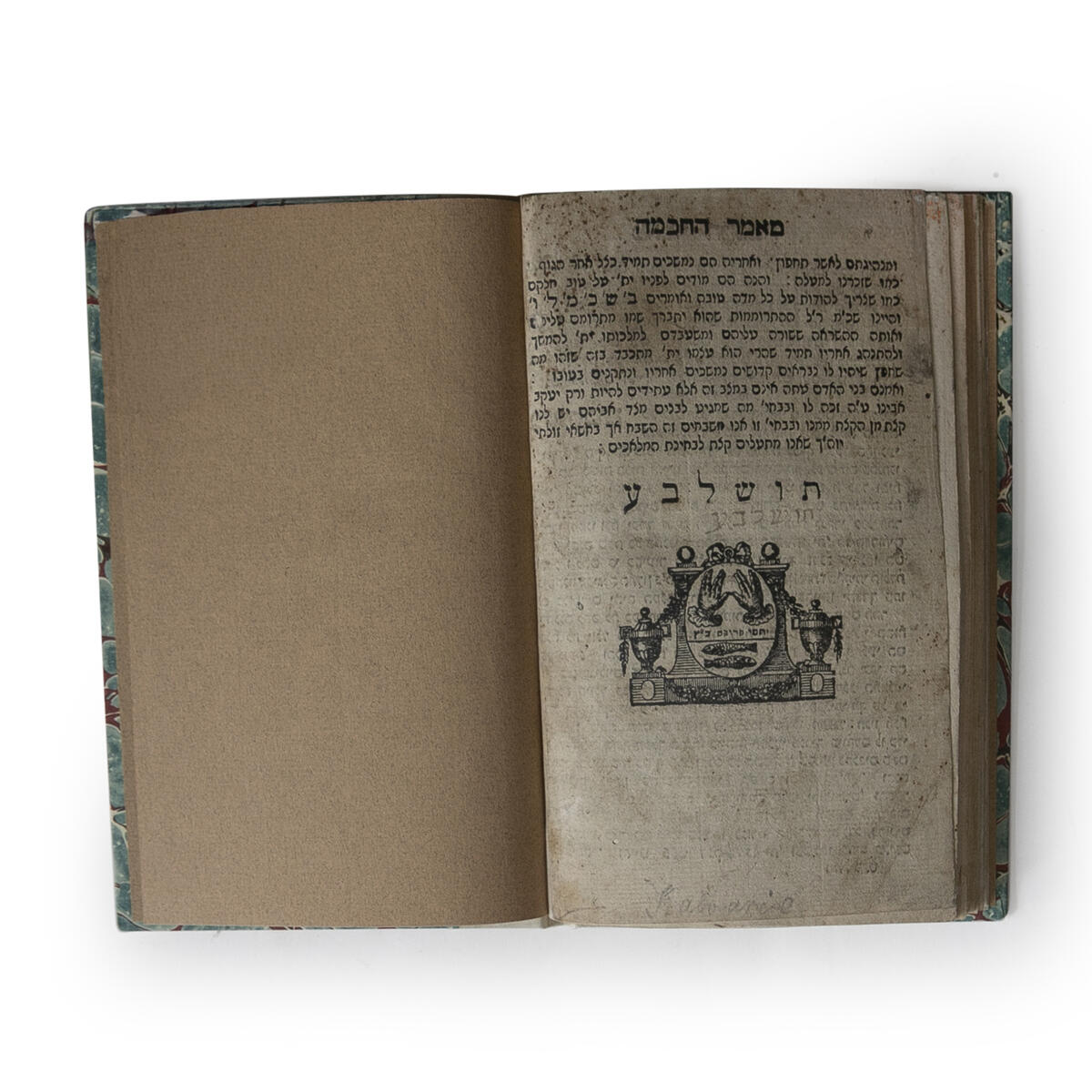
The fourth work makes the collection considerably more intriguing. Its title page calls it Ma’amar ha-Hokhmah, Or ha-Ganuz, but the identity and development of this little work have themselves occasioned scholarly disagreement. An earlier Ma’amar ha-Hokhmah certainly existed. Ramhal mentions a work of that name when describing to his teacher the writings associated with the revelations of his maggid. R. Yosef Ergas likewise reported receiving a Ma’amar ha-Hokhmah from a member of Ramhal’s circle, who told him that Ramhal had presented it as having been written according to his maggid. One interpretation identifies the present work with a later Amsterdam composition, written after Ramhal had ceased openly teaching Kabbalah, but while he continued to teach “the fundamental principles of God’s governance of the world” that he had distilled from it. Another, and particularly consequential, reconstruction regards that earlier Ma’amar ha-Hokhmah as a different composition altogether and identifies the present work by its original name, Or ha-Ganuz.
On the latter reading, the final few leaves of this modest Amsterdam volume mark a small but remarkable moment in the history of Jewish printing: Or ha-Ganuz was the first of Ramhal’s Kabbalistic writings to appear in print. After decades in which his mystical writings had circulated in manuscript under the shadow of the controversy that had engulfed their author, one of them had finally reached the press.
The circumstances make the moment still more striking. The approbations to these publications speak warmly of a figure whose name had once generated fierce opposition. R. Saul Löwenstamm recalled hearing of Ramhal’s greatness already in his Polish youth and praised his brilliance in Torah and secular wisdom, adding pointedly that Ramhal had entered the Pardes and emerged unharmed. The remark carries an extraordinary historical irony. Löwenstamm’s own father, R. Aryeh Leib of Glogau, had been among the leading Polish rabbis who issued a herem against Ramhal during the controversy. Half a century later, the son lent his approbation to the printing of Ramhal’s writings in Amsterdam.
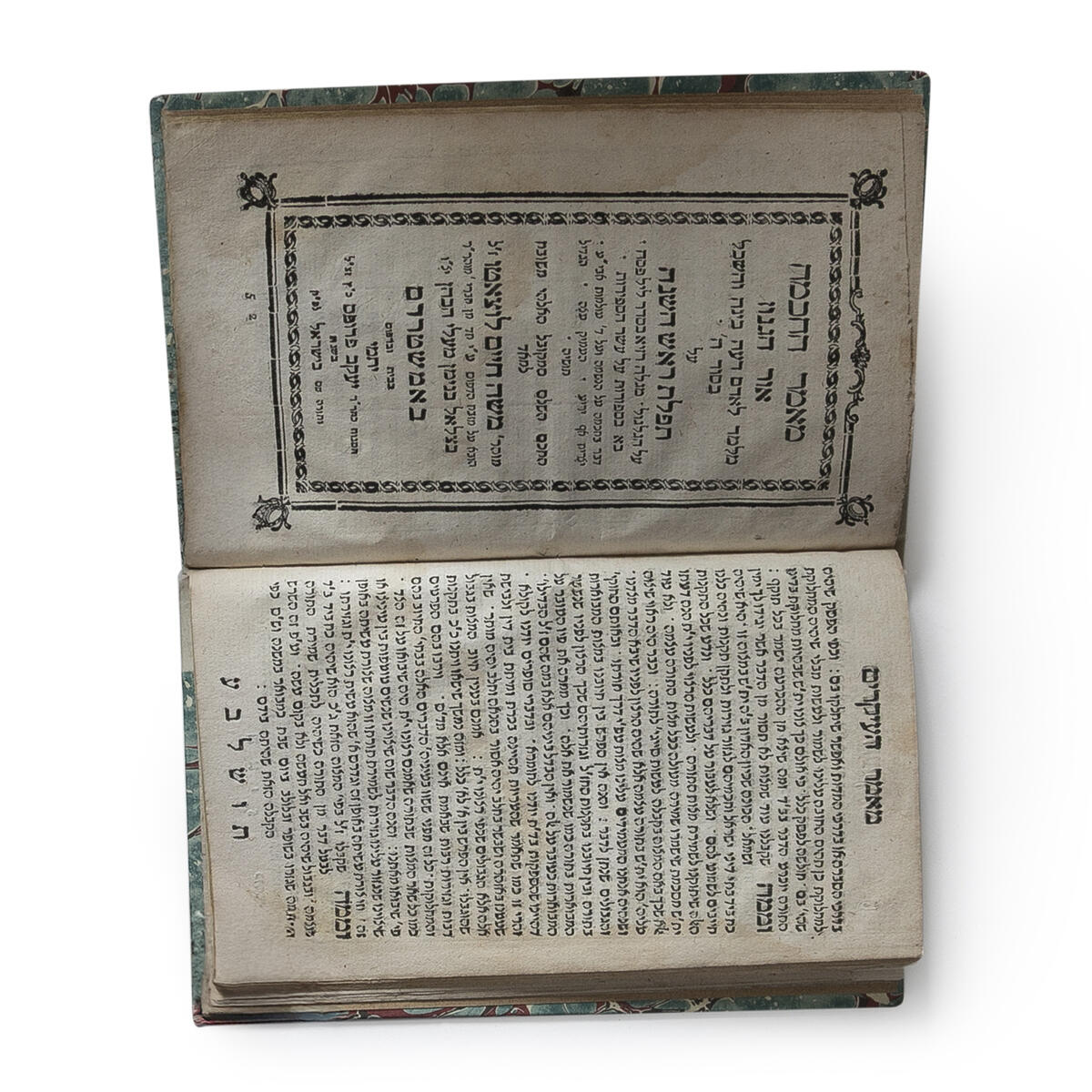
The four title pages preserved in the present volume make that history unusually tangible. Derekh Hokhmah, Ma’amar al ha-Haggadot, Ma’amar ha-Ikkarim, and Ma’amar ha-Hokhmah / Or ha-Ganuz each received its own title page, yet were printed in the same Amsterdam shop, within matching ornamental borders, as components of the same publication. The sequence also reflects the manuscript transmission of the works within Ramhal’s Amsterdam circle. What begins as a dialogue fashioned for students progresses through Aggadah and the fundamentals of faith, and ends, almost unexpectedly, with the “Hidden Light,” the first printed glimpse into the Kabbalistic writings that had remained hidden for so long.
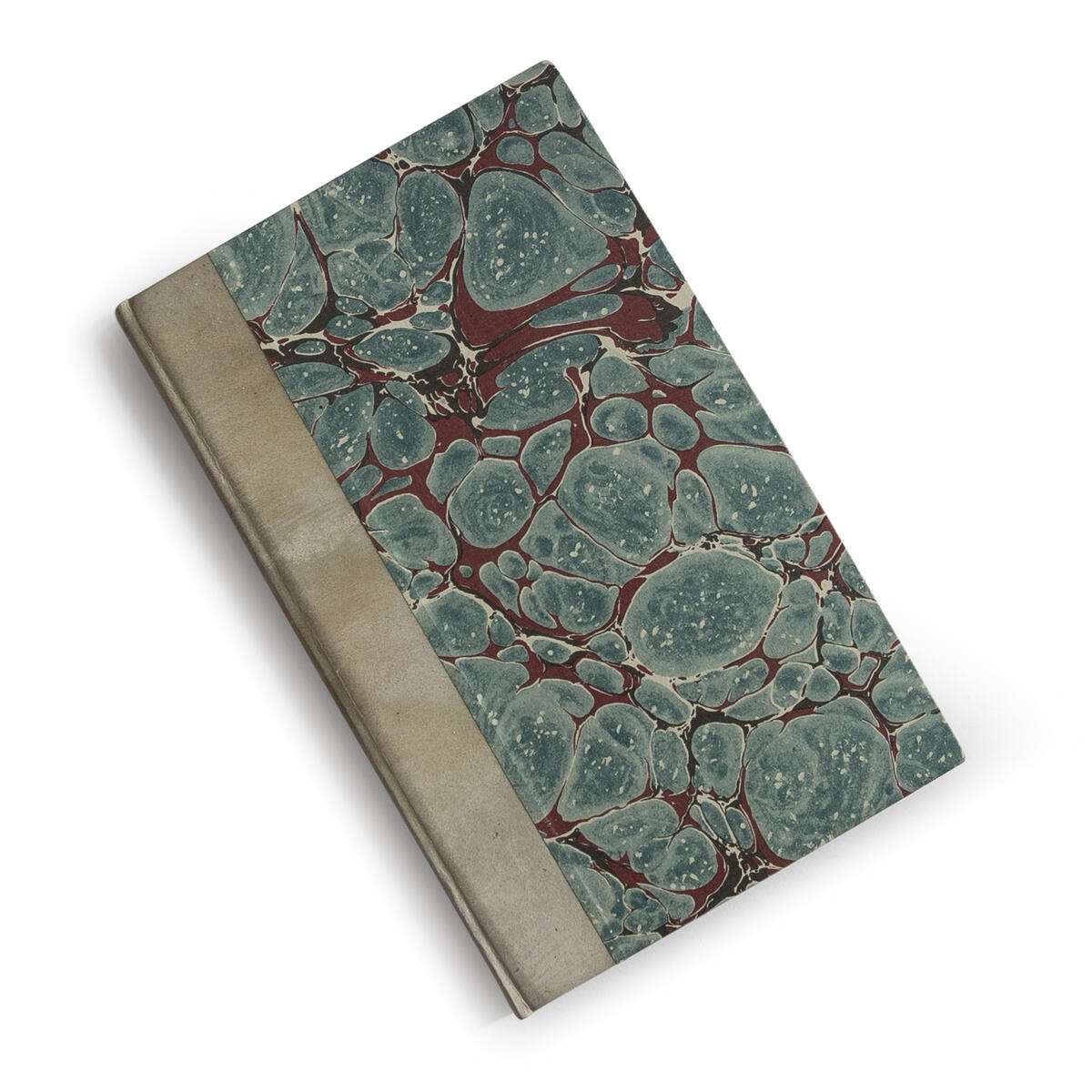
Four works printed and bound together: Derekh Hokhmah; Ma’amar al ha-Haggadot; Ma’amar ha-Ikkarim; Ma’amar ha-Hokhmah – Or ha-Ganuz. Each with a separate title page. Ownership stamp from Dr. Calvary, Posen; additional circular institutional stamp to title page of Derekh Hokhmah. Later half-vellum binding with marbled paper-covered boards. Some staining and signs of use. Overall a well-preserved gathering of the four Amsterdam publications.
References: Benayahu, Kabbalistic Writings of Ramhal (Heb,) 118ff, 172, 230; Tishby, Messianic Mysticism 419; Cohen, Manuscripts from Western Europe 163ff; Sclar, The Rise of the Ramhal 147ff; Avivi, Zohar Ramhal 212ff.
Opening price: $2500
Share this lot: