Auction 1 - Rare Hebrew Books, Manuscripts & Rabbinic Letters
Lot 52:
Description
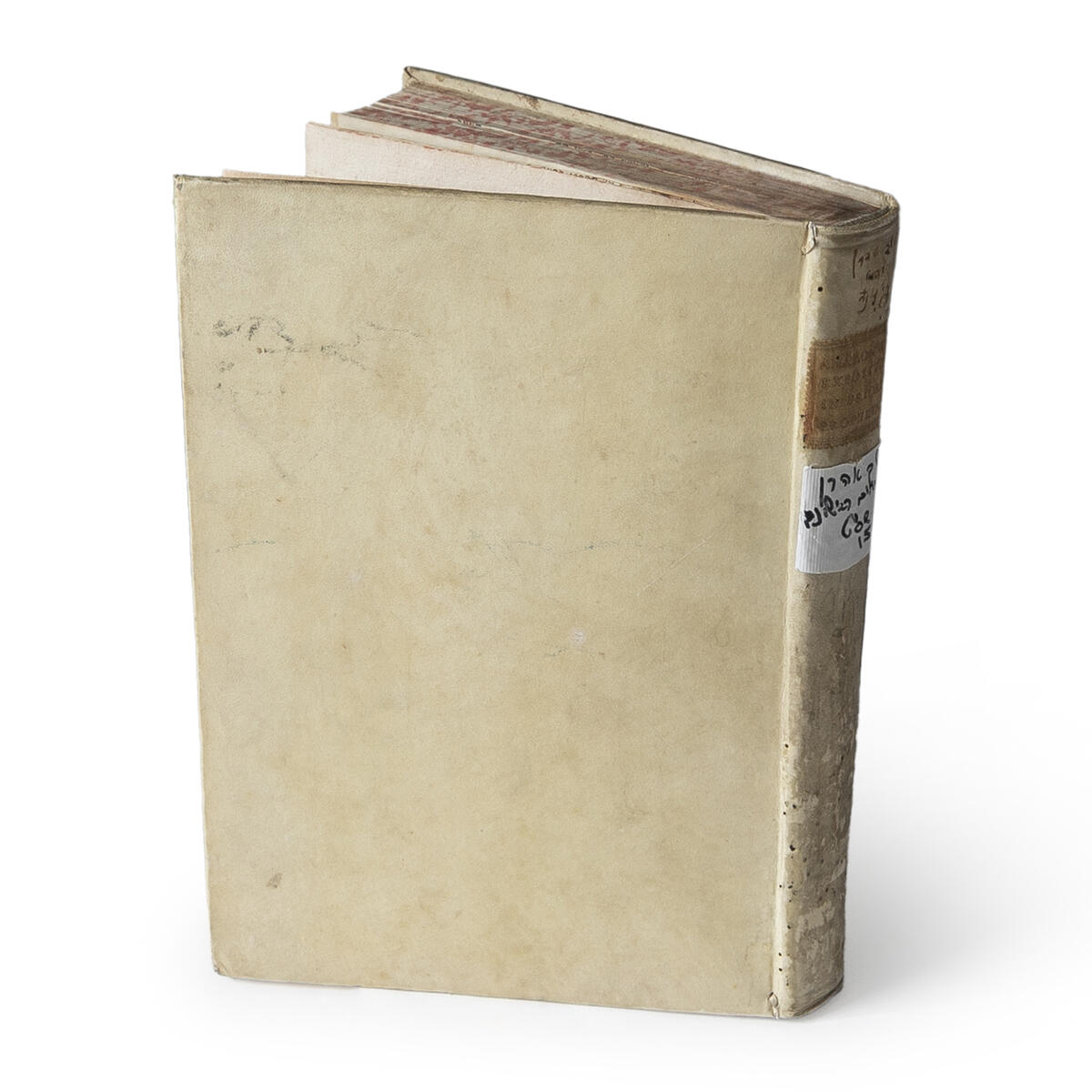
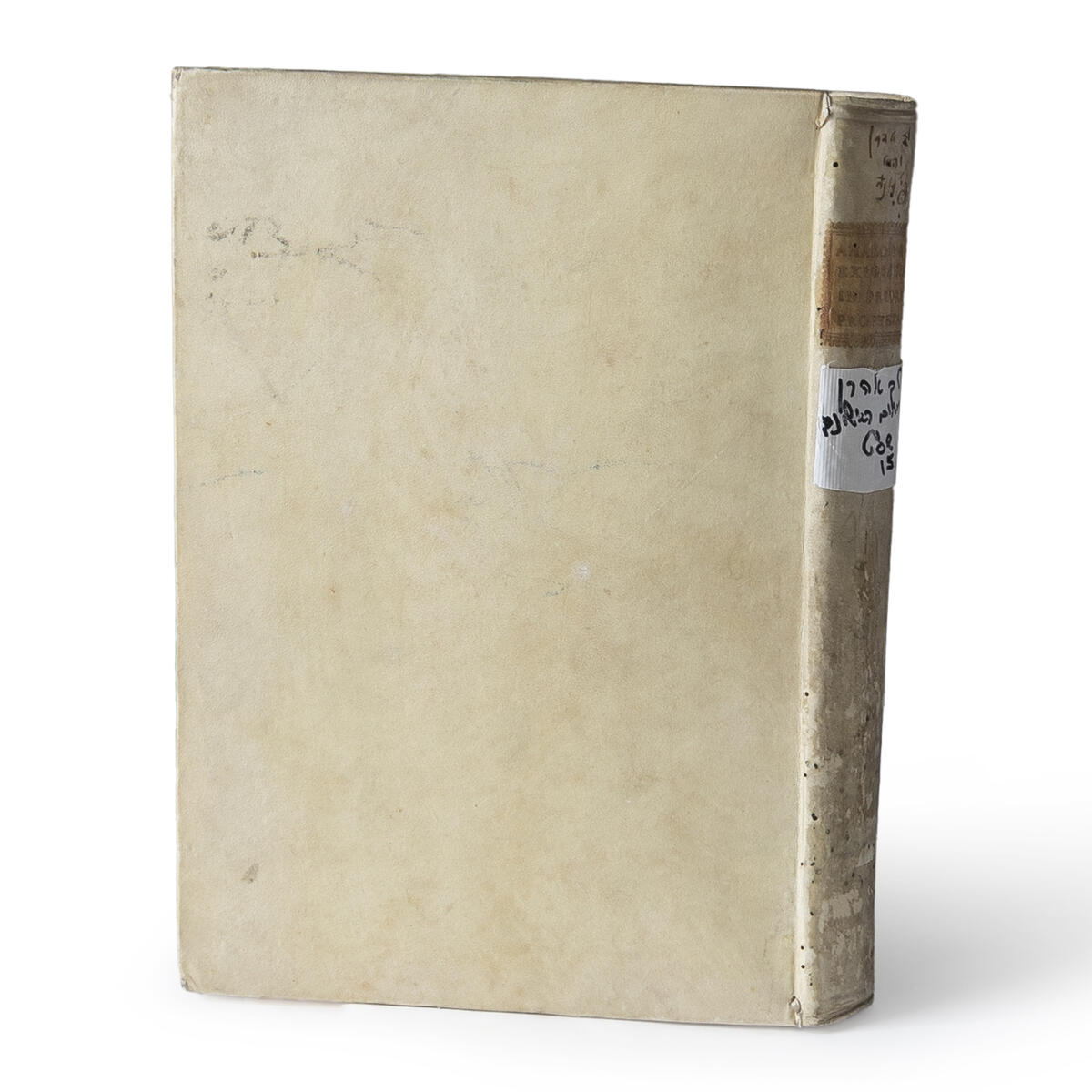
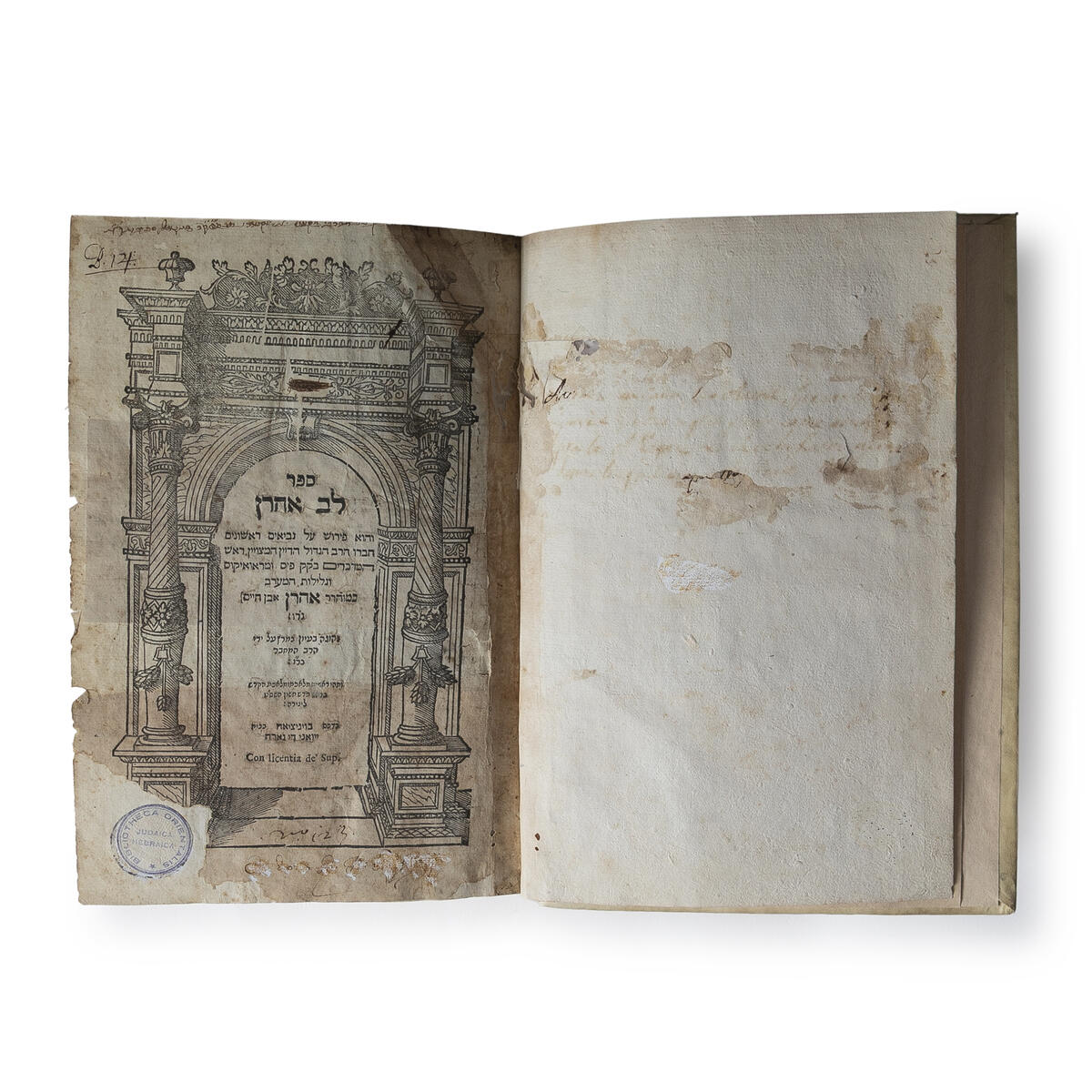
R. Aharon ibn Chaim. Lev Aharon, commentary to Sefer Yehoshua and Sefer Shoftim. The first and only early edition of Lev Aharon, the commentary to Nevi’im Rishonim by R. Aharon ibn Chaim of Fez (c. 1555–1632), among the leading Moroccan rabbis of his generation.
Lev Aharon had its beginnings far from the Venetian press. Ibn Chaim relates that members of his community would gather to hear him expound the Prophets regularly, night after night and Shabbos after Shabbos. New interpretations emerged in the course of these lessons, and he began committing them to writing, lest these gleanings eventually be forgotten. What began as Torah taught to the working men of Fez gradually took shape as a commentary, divided between ביאור, devoted principally to the continuous meaning of the Biblical text, and מדרש, treating the extensive literature of Chazal connected with it. His sources range widely through the Talmudim and Midrashim, alongside philosophy, Kabbalah and the earlier Biblical commentators.
By 1608, Ibn Chaim had accumulated a substantial body of writings, but Morocco offered him no practical means of bringing them to print. Toward the end of that year he left Fez for Venice, expressly for the purpose of publishing his works. Lev Aharon was among the first manuscripts he placed in the hands of the printers. The title page proudly records that the work was carefully corrected by the author himself, and dates the commencement of printing to Rosh Chodesh Cheshvan 5369.
Ibn Chaim’s stay in Venice soon became considerably more than a visit to the printing house. Although newly arrived from Fez, he was received with distinction by the city’s rabbis and was soon participating in its rabbinic affairs. In 1609 he joined the Venetian rabbinate in a controversial ruling concerning an anus who was presumed to be a Kohen; shortly afterward he signed the public declaration clearing R. Yedidiah Galante, the Safed emissary and son of the celebrated R. Moshe Galante, of the charge that he had misappropriated monies collected for Eretz Yisrael, after Galante had taken a solemn oath that he was entirely innocent. Ibn Chaim subsequently taught in the Spanish congregation’s Talmud Torah, corresponded in halachah with scholars elsewhere, and associated with leading figures of Venetian Jewish life, including R. Yehudah Aryeh Modena. The language in which contemporary scholars addressed him suggests the standing the Moroccan visitor had acquired remarkably quickly.
One of his Venetian students, R. Ezra ben Shlomo Alhadab, left a more personal record of these years. Alhadab contributed a poem of praise to Lev Aharon, thanking his teacher for the kindness he had shown him and for having taken pains להבין ולהשכיל לעבדך דברי אלהים חיים, “to give your servant understanding and knowledge of the words of the living God.” He later recalled delivering his first independently composed sermon in 1611 while studying before Ibn Chaim.
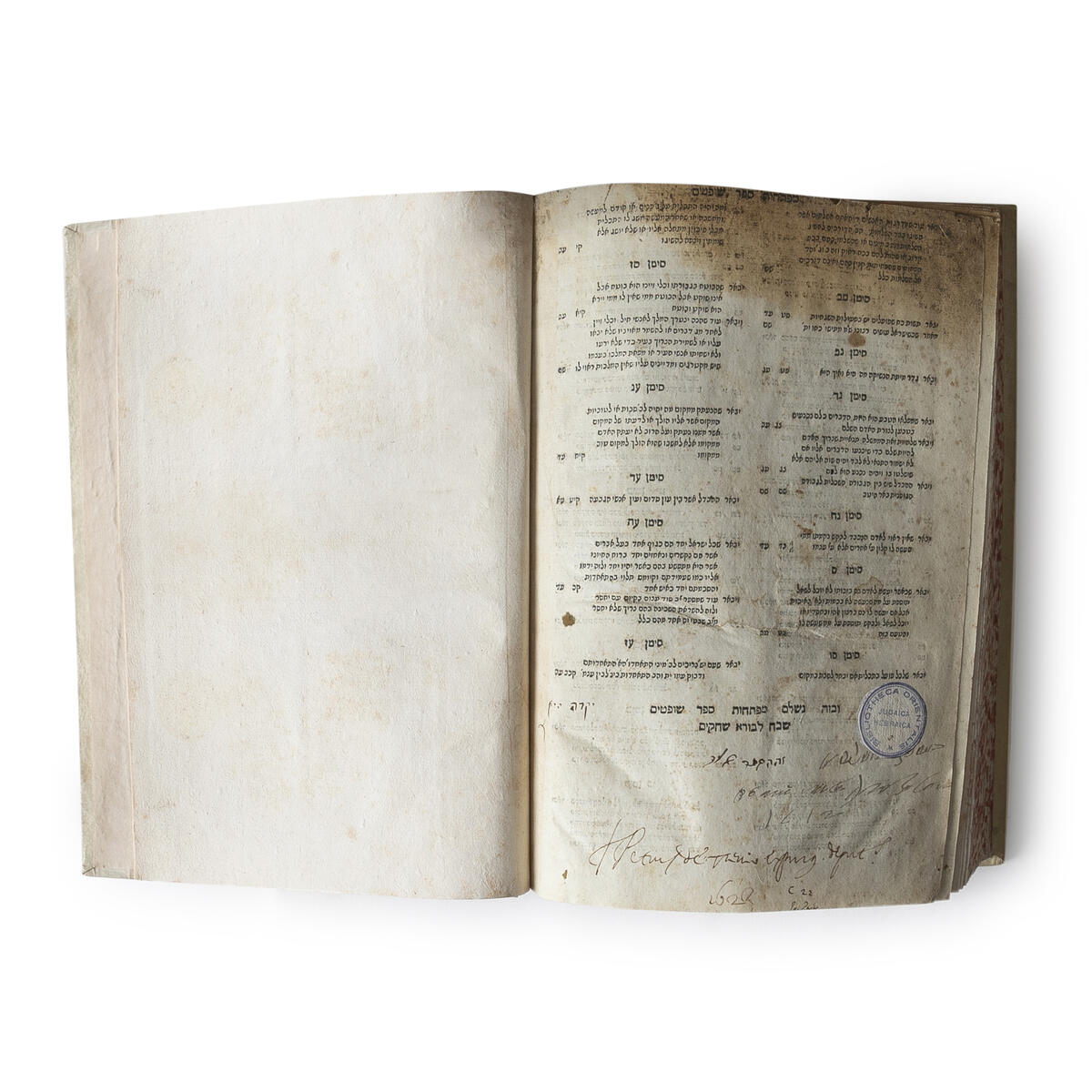
There is also something unfinished about the book. Its title announces a commentary על נביאים ראשונים, yet the volume which emerged from di Gara’s press contains only Yehoshua and Shoftim. Ibn Chaim was an unusually prolific author, and only a portion of what he wrote ever reached print. He remained in Venice for several years after Lev Aharon appeared, yet the remainder of his literary program was never completed there. The reason is unknown; financial difficulty has been suggested, though no evidence presently permits certainty.
The fate of Lev Aharon itself was curious. Ibn Chaim’s Korban Aharon and Middot Aharon became standard works and were repeatedly reprinted. Lev Aharon did not enjoy the same fortune. It was never reprinted in the early period, and later scholarship has suggested a simple explanation: its author’s groundbreaking works on the Sifra and the Thirteen Hermeneutical Principles filled an obvious need in the rabbinic study hall, while an expansive commentary to Nevi’im attracted a narrower readership.
Thus the present volume preserves something of an interrupted project: interpretations first delivered to a circle of listeners during the evenings and Sabbaths of Fez, carried by their author across the Mediterranean, and personally seen through the press in Venice. Ibn Chaim had written them down lest פן הלקט יעשה שכחה, the gleanings be lost to forgetfulness. Lev Aharon was the portion of those gleanings that made it into print.
Condition: complete, attractive copy in full vellum binding. Title with old repair not effecting text. No worming.
References: Amar, Le-Toldot Rabbi Aharon ibn Chaim (Heb.) 23; Heller, Seventeenth 217
Provenance: The collection of Abraham Lieberman, Flatbush, Brooklyn NY
Opening price: $1000
Share this lot: